How to Find the Viral Moment in a Two-Hour Video
Updated
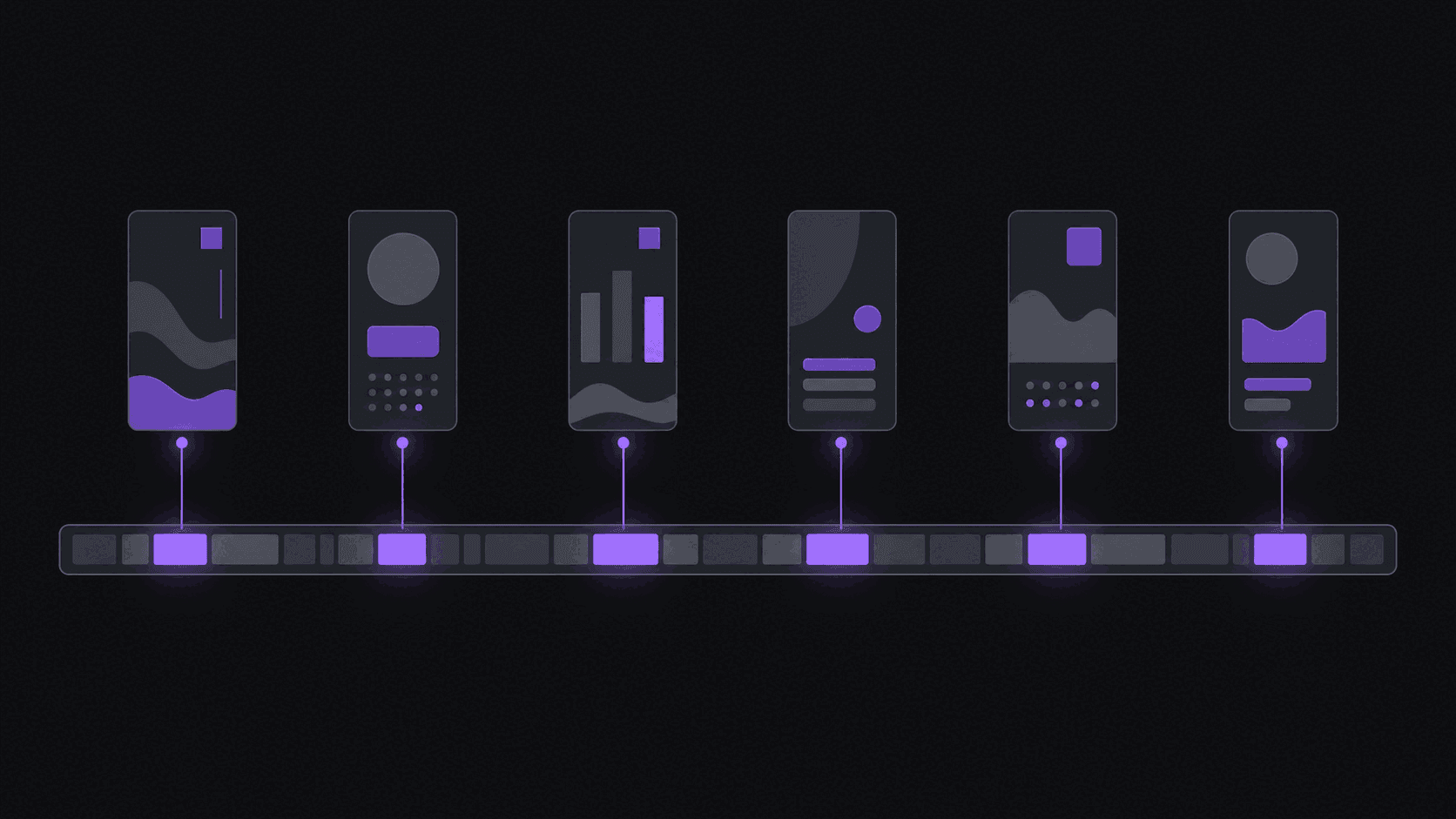
What you're actually looking for
New clippers scrub a timeline hunting for "the good part." That framing is why it takes them two hours to find three clips.
A moment worth cutting has a shape, and you can describe it. Something changes in it. A question gets an answer nobody expected. A number lands that reframes the whole topic. Somebody's tone shifts because they've stopped being careful. A story reaches the thing the story was for.
Moments without that shape — good explanations, agreeable conversation, competent gameplay — don't clip regardless of how enjoyable they are in context. Enjoyment inside a long video comes partly from the video around it. A clip has no around it.
So the question isn't "is this good?" It's "does this contain a change that a stranger would register in the first three seconds?"
The signals worth learning to read
You can spot most of these without watching the whole thing.
A sentence that could be a title. If a line would work as text on screen with no other context, that's a clip. "Most people lose more to fees than to bad picks" is a clip. "So then we looked at the data" is not.
A break in delivery. People speed up, get louder, or go quiet right before they say the thing they actually came to say. Rhythm changes are where the material is.
A genuine reaction. Someone laughing at something they weren't expecting, a guest sitting forward, a streamer's voice cracking. Real reaction is the most reliable indicator that something happened.
Contradiction. Any moment where someone pushes back on received wisdom, or where two people disagree without it turning hostile. Disagreement is the cheapest source of comment-section activity.
A number attached to a consequence. Not statistics — consequences. "$40 a month" is nothing. "$40 a month is $19,000 over thirty years" is a clip.
What's overrated: the loudest moment. Volume gets confused with significance constantly, and a compilation of loud moments performs worse than a well-chosen quiet one. Why 3-second hooks are overrated is a useful corrective to the standard advice here.
The five-second review test
Once you have candidates, you need a way to judge them quickly, because the failure mode is agonizing over each one.
Watch the first three seconds only. Ask: would I keep watching if this arrived in my feed from an account I don't follow? Not "is this interesting given I know the context" — you're compromised, you've seen the source. If the honest answer isn't an immediate yes, the clip needs a different start point or it needs to die.
Then check the ending. Does it stop on the last word of the thought, or does it drift? Drift is the most common defect and the easiest fix.
Then check the middle for one thing: is there a moment where a stranger would get lost? Usually it's an unexplained name or a reference back to something earlier in the source. If so, either trim into it later or handle it in the caption.
Three passes, a few seconds each. Most clippers who feel slow are slow because they watch each candidate all the way through, which tells you how the clip ends and nothing about whether anyone will get there.
Letting the tool do the first pass
The value of automated clipping isn't that it has better taste than you. It's that it removes the scrubbing.
Submit a video and around 9 candidates come back for a typical source, already reframed to vertical with the speaker kept in frame and word-synced captions applied — in around 5 minutes, proportionally longer for a multi-hour stream or a five-hour upload. Each one arrives with a virality score and a breakdown across five criteria, so you can see why it was ranked where it was rather than being handed a number to trust blindly.
What that changes about your day: you go from hunting to judging. Nine candidates, five seconds of review each, and you know within a minute whether this source video had anything in it. If it didn't, you've lost a minute instead of an hour.
What it doesn't change: the score is an opinion, not a verdict. It reads the moment; it can't know that the audience you've built is tired of this particular topic, or that a rival channel posted the same moment yesterday. Every clipper who does well overrides the ranking regularly. How to use the viral prediction score covers reading the breakdown, and what a clip score means explains the criteria.
The part you can only learn by posting
Everything above will get you to competent. Getting past competent requires the one input no framework provides: your own results.
After forty or fifty clips you'll start noticing patterns that are specific to your niche and your audience — a format that always overperforms for you, a moment type that keeps flopping despite looking great, an optimal length that's nothing like the general advice. That knowledge is worth more than any checklist, and it's the reason volume matters early.
Track one metric while you build it: what share of viewers finish the clip. Views tell you what the algorithm did. Completion tells you whether your cut was right. Chasing views leads to clickbait titles on weak clips; chasing completion makes you a better clipper. Reading clip analytics covers which numbers deserve attention and which are noise.
Frequently Asked Questions
It can rank candidates by how strongly they show the traits that clips which travel tend to share. That's genuinely useful for narrowing nine candidates down to three. It is not a prediction of view count — timing, competition, and audience fatigue matter enormously and none of them are visible in the source video.
Lines that stand on their own — a claim, a specific number with a consequence, a contradiction of common advice, or the resolution of a story. Lines that depend on the previous five minutes score poorly, correctly, because they don't work in a feed.
Around 9 from a typical video, with per-video caps by plan: 6 on Starter, 12 on Pro, 15 on Scale. How many are worth posting depends entirely on the source — a dense interview might give you five keepers and a meandering stream might give you one.
Related Articles
See also
Stop scrubbing, start choosing
Submit a video and get around 9 ranked, vertical, captioned candidates back with a transparent score breakdown. Judge them in five seconds each instead of hunting through the timeline.
Get started for free