Content Repurposing Strategy: A Working System for 2026
Updated
Short answer: what a content repurposing strategy looks like
Audit your sources first, then run four layers in order: capture, extraction, adaptation, distribution. Most repurposing plans fail at source selection, not at the edit — one or two sources usually carry almost everything and the rest cost attention for nothing.
Set cadence at roughly seventy percent of what your genuinely available hours could produce, so a bad week does not break the streak. Great distribution on weak extraction is just faster failure.
Key takeaways
The four layers at a glance
Each layer has a distinct failure mode, and fixing a later layer never rescues an earlier one.
| Layer | What it does | Failure mode | Can it be automated |
|---|---|---|---|
| 1. Capture | Monitors sources so new uploads enter the queue | Checking channels by hand every morning | Yes, channel monitoring |
| 2. Extraction | Pulls and ranks candidate moments | Clips that open on a wind-up | Yes, around 9 candidates per typical video |
| 3. Adaptation | Per-platform cuts, aspect ratios, translations | One export pushed to five places | Partly — 31 caption languages, 25 dubbing |
| 4. Distribution | Spaced posting on a schedule | Clustered posting, then silence | Yes, 9 destinations |
Most Repurposing Plans Fail at the Source, Not the Edit
The usual advice is to chop your long-form into shorts and post everywhere. That advice skips the part that decides whether any of it works: which long-form you chop.
A ninety-minute interview where the guest tells three real stories will give you five or six clips people finish. A ninety-minute stream that is mostly menu screens and chat replies will give you one, and you will waste an afternoon finding it. Same runtime, wildly different clip yield.
So the first move in any repurposing system is auditing your sources, not your editing workflow. For each source ask: how many finishable moments per hour does this reliably produce? Track it for three weeks. You will find that one or two sources carry almost everything, and the rest are costing you attention for nothing.
Cut the dead sources. That single decision does more for output than any tool.
The Four-Layer System
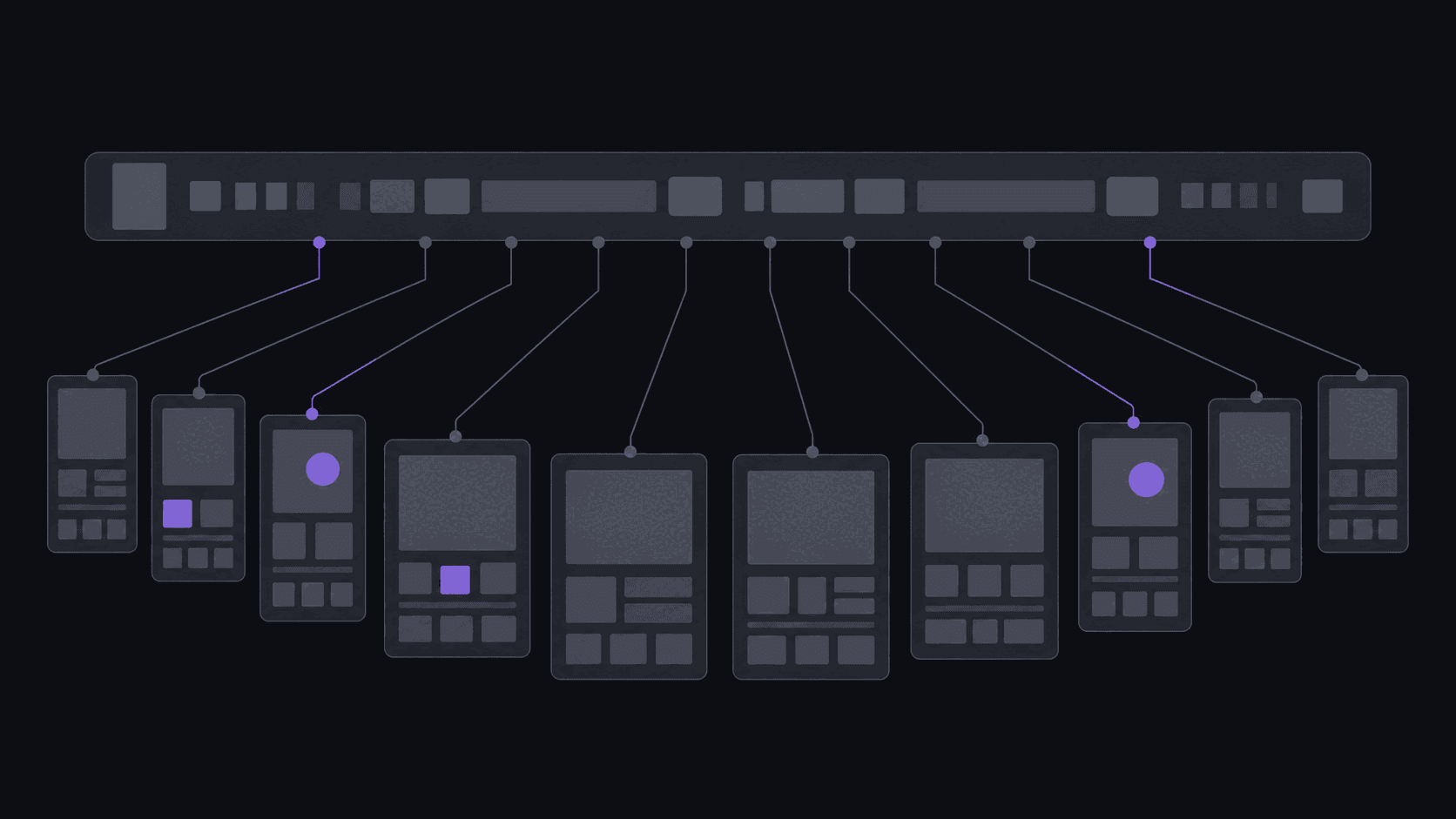
Once your sources are good, repurposing becomes four repeatable layers.
Layer 1 — Capture. Every source you care about gets watched automatically rather than manually. Public YouTube channels, Twitch VODs, and Kick streams can all be monitored so new uploads enter your queue without you pasting a URL. If you are still checking channels by hand each morning, that is the first thing to delete from your week.
Layer 2 — Extraction. Pull the candidate moments and rank them. You are looking for segments that open on something interesting rather than a wind-up, and that resolve before the viewer's patience runs out.
Layer 3 — Adaptation. One clip is not one asset. It is a vertical cut for TikTok and Reels, possibly a square version, and on Pro and Scale plans a translated or dubbed version for other language markets. Adaptation is where a single good moment turns into four or five posts.
Layer 4 — Distribution. Spaced posting across platforms on a schedule you don't have to babysit. AutoClip auto-posts to 9 short-form destinations, which matters less because it saves clicks and more because it enforces cadence when you're busy.
The layers only work in order. Great distribution on weak extraction is just faster failure.
Cadence: The Number Most People Get Wrong
Posting more is not the strategy. Posting consistently at a level you can hold for six months is.
The failure pattern is identical every time: someone posts nine clips in week one, four in week two, zero in week four, then declares the algorithm broken. What actually happened is they picked a cadence they could sustain for eight days.
Work backwards instead. Decide the number of hours per week you will genuinely spend on this — including review, titles, and thumbnails, not just processing time. Then set cadence to about seventy percent of what those hours could produce. The headroom is what lets you survive a bad week without breaking the streak.
Some anchors from the plan structure that are worth borrowing as targets: Starter supports 200 credits per month, which is a comfortable one-source cadence. Pro's 500 credits per month fits someone running two or three channels. Scale's 1200 credits per month is agency territory. If your ambition exceeds your tier by a lot, the problem is usually ambition, not the tier.
More on the specifics in our posting cadence guide.
Where Repurposing Stops Working
Three honest limits.
Repurposing does not fix a source nobody wants. If the long-form has no audience because the material is dull, the shorts will be dull too, only shorter. Clipping amplifies; it does not create.
Every source fatigues. Post enough clips from one channel and the returns fall as your audience saturates. Source fatigue is real and shows up as a slow decline in view velocity that looks like an algorithm change. Rotate sources before you feel it.
Cross-posting the identical file everywhere has a ceiling. Platforms notice. Vary hooks, captions, and openings between destinations rather than pushing one export to five places and hoping.
There is also a category of content that just should not be repurposed: anything whose value depends on the full arc. A twenty-minute build-up to a reveal does not survive being cut to forty seconds. You will get a clip that technically exists and that nobody finishes.
Your First Week
A concrete plan rather than a philosophy.
Day 1 — List every source you currently pull from. Score each one honestly on finishable moments per hour. Keep the top three.
Day 2 — Set up monitoring on those three so new uploads and VODs get picked up without you. Decide your caption style and your channel look once, save it as a brand kit, and stop re-deciding it weekly.
Day 3-4 — Process two real sources. Review everything that comes back and note how many you'd post untouched. That ratio is your true throughput.
Day 5 — Write your cadence down as a number. Schedule a week's worth of posts in advance so a busy Tuesday can't break the streak.
Day 6-7 — Pick your two best clips and hand-finish them. Title them properly. This is where your taste goes, and it is the part that shouldn't be automated.
Then repeat and change exactly one variable a week — hook style, posting time, source mix. Changing five at once teaches you nothing.
Frequently Asked Questions
Around nine from a typical video, with real variance. Interview and podcast formats yield more than streams with long quiet stretches. Chasing a fixed number per video is a mistake — some sources honestly only have three good moments in them.
Post the same moment, not the same file. Change the hook line, the caption styling, and the first frame between destinations. Identical uploads across platforms perform worse and invite duplicate-content problems.
A week is the sweet spot. Far enough that a busy day can't break your cadence, close enough that you can still react to something timely. Scheduling a month out tends to produce stale-feeling feeds.
Have two backups running before you need them. Channels go quiet, get deleted, or change format. A repurposing system dependent on one source is one announcement away from having nothing to post.
It can. Caption translation in 31 languages and dubbing in 25 of them are available on Pro and above, which lets one source feed multiple language markets. Whether it works depends on the material — story-driven content travels well, wordplay does not.
Related Articles
See also
Turn Three Sources Into a Standing Pipeline
Set up monitoring once and new uploads get clipped, captioned, and queued without you pasting another URL.
Get started for free