What Is Clip Farming? The Complete Answer for Clippers
Updated
The definition, and the reason people disagree about it
Two people upload 40 clips a week from the same podcast. One is building an audience; the other is getting throttled. Same volume, opposite outcome — and the word people use for both of them is clip farming.
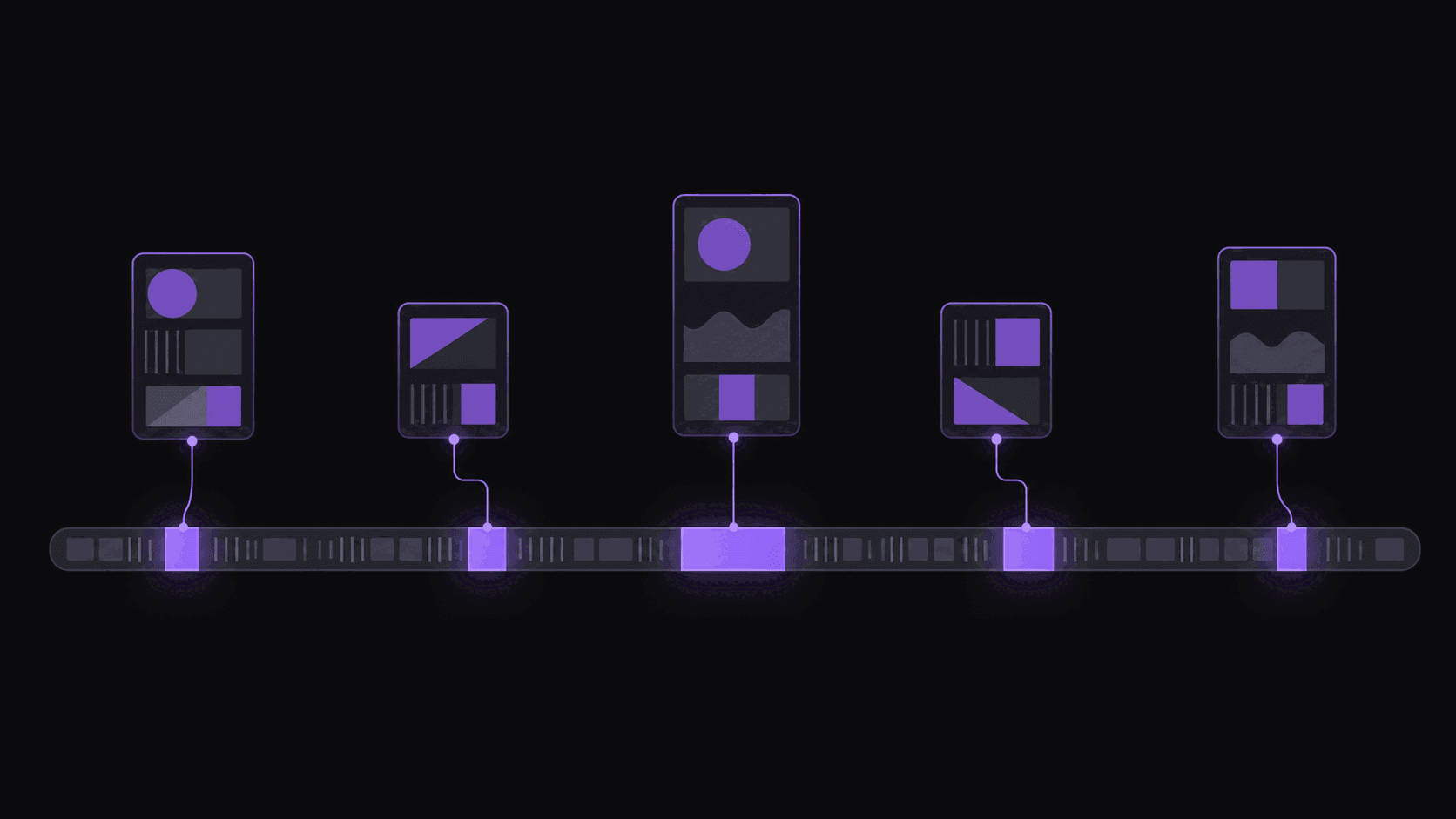
The working definition: producing short-form clips at high volume, usually across multiple accounts or platforms, treating output as the primary lever on income. The term gets used two ways. Clippers use it neutrally, to describe a volume strategy. Critics use it pejoratively, to describe low-effort spam. Both usages describe real things, and the difference between them is entirely about selection.
A farmer who generates 60 candidate clips a week, posts the 20 that are actually good, and lets the rest go is running a legitimate operation with high throughput. A farmer who posts all 60 is producing spam, will train their audience to scroll past, and will eventually get throttled for it.
The volume isn't the problem. The absence of a filter is. Clip yield and output velocity are the two metrics that describe the tension.
Why anyone farms in the first place
Because short-form performance is genuinely unpredictable, and volume is the only reliable way to buy attempts.
A clip that seems obviously great does 1,200 views. A throwaway does 400,000. Anyone who's posted a few hundred clips has stories in both directions. You can improve your hit rate with better hooks and better source selection — meaningfully, not decisively. What you cannot do is predict which specific clip catches.
So the strategy follows: post more, keep the winners, and let the distribution do the sorting. If one in twenty clips carries, then 20 posts a week gives you roughly one carry a week and 60 gives you three.
The second driver is that most clip income is paid per view. Content-reward campaigns pay per qualifying view with no follower threshold, ad revenue is per thousand views, and neither cares how many hours you spent on any individual clip. Under a per-view payment model, output is income in a very direct way.
Justin, a clipper, made about $3,000 in a month clipping. Alex made $400 with no prior editing experience. Results like these aren't typical — earnings depend on your niche, the campaigns you post to, and how consistently you publish. What both illustrate is that the mechanism is repetition, not a single breakout.
Where farming stops working
Four failure modes, and every farmer hits at least one.
Source fatigue. Clip the same channel long enough and your audience has seen every moment worth seeing. Views decay even though your effort doesn't. The fix is source rotation — see source fatigue.
Duplicate suppression. Posting the same clip to five accounts, or reposting your own clip verbatim, gets detected. Platforms are considerably better at this than they were two years ago. Real variation — different hooks, different cuts, different framing — is required, not cosmetic changes.
Quality collapse. The moment volume becomes the only goal, your median clip gets worse, your completion rate drops, and the platform stops showing you to new people. This is the most common way farming operations die, and it happens gradually enough that people don't notice until the numbers have halved.
Your own time. This is usually the real ceiling. A person can manually cut, caption, and reframe maybe 15 clips a day before quality falls apart. Everything above that number has to come from somewhere else.
That last constraint is where automation matters, and it's worth being precise about why. Automation doesn't make you post more junk faster. It removes the mechanical part — finding the moments, cropping vertical, syncing captions — so that your remaining time goes into selection and hooks, which are the parts that actually decide performance. A typical video comes back in about 5 minutes with around nine clips, and your job becomes choosing among them.
The math, run properly
Take a realistic mid-sized operation: three source channels, roughly 25 clips generated a week, 15 posted after filtering, across two platforms.
That's about 65 posts a month. At a 1-in-20 hit rate you'd expect three clips to significantly outperform, and those three carry most of the month's views. The other 62 keep the accounts active and give the algorithm surface area.
On the cost side, one credit covers one source minute. Three channels producing four hours of source a week is roughly 960 minutes a month — Scale at $79.99/mo (1200 credits, ten monitored channels, priority processing) if you want headroom, or Pro at $39.99/mo (500 credits, three monitored channels) if you're selective about what you submit. Starter at $19.99/mo with 200 credits suits a single-source operation. Streams are the exception: Twitch and Kick VODs bill only on top highlight segments, typically 35-90 credits for a multi-hour stream, which makes stream farming unusually cheap.
The comparison that matters isn't the subscription against zero. It's the subscription against the hours you'd otherwise spend scrubbing, cropping, and captioning — which for 65 clips a month is a part-time job. See pricing and the true cost per clip.
Frequently Asked Questions
Posting volume isn't. What breaks rules is duplicate content, engagement manipulation, and reuploading material with no transformation. High-volume original clipping with credited sources sits within normal terms on every major platform.
Start with one and get it working. Multi-account only pays once you have a format that reliably performs, and running several badly is worse than running one well. When you do expand, give each account a distinct niche rather than duplicating output across them.
Roughly 1 in 20 clips substantially outperforming is a normal working assumption, though it varies a lot by niche and source. If you're at 1 in 100, your problem is source selection or hooks, not volume.
It does if you skip the filter. Posting everything you generate drops your median quality, and completion rate is what platforms actually reward. Farming with a hard filter — generate a lot, post a fraction — grows channels fine.
Credit the source creator in the description and tag them where the platform supports it. Most creators welcome the distribution; the ones who don't will tell you, and it's cheaper to find out through a credit than through a strike.
Related Articles
VOD Farming: How to Mine Stream Archives for Clips Without Burning Out
6 min readHow Many Clips Should You Post Per Day? The Data-Backed Answer
7 min readThe True Cost of AI Clipping Tools in 2026: What You Actually Pay Per Clip
8 min readClip Channel Burnout and Batch Processing: What Actually Helps
4 min readSee also
Put your clip farming on autopilot
Generate around nine clips from a typical video in about five minutes, then spend your time picking the good ones instead of scrubbing timelines.
Get started for free