What Is a Clip Hook? Opening Hooks, Attention Hooks, and Retention Hooks Explained
Updated
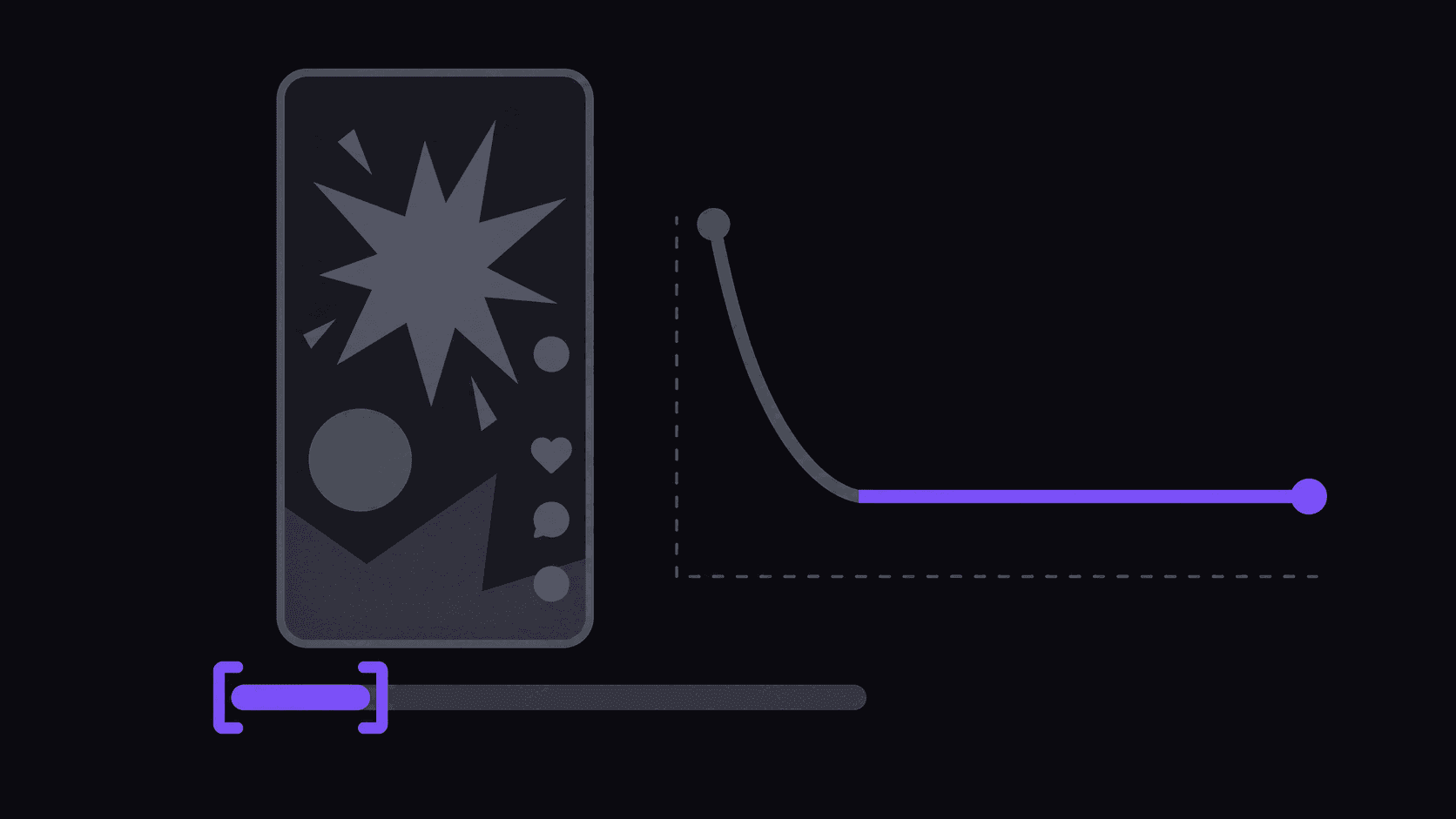
Most people mean only one of the three when they say hook
The standard advice is that the first three seconds decide everything. That's a third of the truth, and building on only that third produces clips with excellent opens and terrible completion.
There are three distinct jobs, and they fail at three distinct points:
The opening hook stops the scroll. It operates in the first one to three seconds and its only job is preventing the swipe. Fail here and nothing else in the clip exists.
The attention hook carries the middle. It's the reason someone who stopped at second two is still watching at second fifteen — a question you haven't answered, a claim you haven't justified, a story that hasn't landed.
The retention hook gets them to the end. It's the payoff the whole clip has been promising, and it's what turns a 40% completion clip into an 80% one.
Every clip that underperforms is failing one of these specifically, and knowing which one changes what you do about it. Hook rate and completion rate are the two numbers that tell you where.
Diagnosing which hook is broken
Look at your retention graph, not your view count.
Heavy drop before second three. Your opening hook failed. The clip started with setup, or with a face nobody recognises saying something unremarkable, or with the speaker mid-throat-clear. Fix: find the strongest sentence in the clip and start there, even if it means the context arrives afterwards.
Steady bleed through the middle. Your attention hook is missing. There's no open loop — the viewer already knows where this is going, so there's no reason to stay. Fix: make sure the interesting claim is stated before it's explained, so the explanation is something the viewer is waiting for rather than something they're enduring.
Cliff at 70-80%. They got bored right before the payoff, which usually means the payoff arrived late or wasn't worth the wait. Fix: cut the clip shorter. Most clips with an 80% cliff are 15 seconds too long.
Flat retention, low views. Your hooks are fine; your distribution isn't. That's a titling, thumbnail, or posting-time problem, not a hook problem. Don't rewrite your opens to fix an audience problem.
This diagnostic order matters. People rewrite their opening hook when the actual failure is at second thirty, and then conclude hooks don't work.
What each hook looks like in practice
Opening hooks that work. A contradiction of something the audience believes. A named person the audience has an opinion about. A number that seems wrong. A sentence that begins mid-argument, so the viewer wants to know what preceded it. A visible emotional reaction on a face.
What doesn't: "So today I want to talk about…", any greeting, any logo animation, and any sentence whose first four words could open a hundred other clips.
Attention hooks that work. Stating a conclusion and then explaining it. Naming a mistake before saying what it was. Setting up a comparison — "there are two ways this goes" — so the viewer stays to see the second one. A story with a stated stake.
Retention hooks that work. The answer to the question you opened with, delivered cleanly. A reversal — the thing turns out to be the opposite of what the setup implied. A final line that recontextualises the clip.
One technique that spans all three: a spoken hook line at the very front, in the speaker's cadence, that frames what's coming. On Pro and above these can be generated for a clip, which is useful when the best moment in a source starts abruptly and needs a sentence of orientation to make sense standing alone.
More examples in 10 types of viral clip hooks.
The uncomfortable part: hooks can't rescue a boring moment
There's a lot of content teaching hook formulas, and formulas do help — at the margin. What they don't do is make an uninteresting 40 seconds interesting.
If you take a mediocre stretch of a podcast and put a perfect opening hook on it, you get a clip with a good hook rate and a terrible completion rate, which the platform reads as a bait-and-switch and stops showing. You've made things worse, not better.
So the priority order is: pick a genuinely good moment first, then find the best entry point into it, then tighten the middle, then make sure the ending lands. Hook craft is step two through four. Step one is selection, and it dominates.
This is where automatic clipping earns its place — from a typical video you get around nine candidates back in roughly 5 minutes, each already cut to start near a strong entry point, with word-synced captions and vertical framing done. Your work becomes choosing among moments and adjusting the entry point, which is exactly where your judgement is worth the most. See how to write clip titles that beat the algorithm for the layer above this, and why 3-second hooks are overrated for a longer version of this argument.
Frequently Asked Questions
One to three seconds of actual content, and it should be the first thing on screen. No intro card, no logo, no greeting. If your clip has a title card, the hook is already too late.
Yes. A large share of viewing happens muted, and word-synced captions mean the hook lands for people who never turn the sound on. If your hook only works audibly, it fails for a big chunk of your audience.
Above 50% of viewers still watching at three seconds is decent on most platforms; above 70% is strong. Compare against your own clips rather than published benchmarks, because the number varies enormously by niche and format.
Occasionally, if the visual itself is arresting or the person on screen is someone the audience recognises instantly. That's not a strategy though — it's a property of certain sources you don't control.
Sometimes, but they're overused and audiences have learned to scroll past them. A stated claim usually outperforms a rhetorical question, because a claim invites disagreement and disagreement is stickier than curiosity.
Post the same moment twice, weeks apart, with different entry points, and compare the retention graphs. It's slower than a proper test but it's the only version available on platforms that don't offer A/B tools for organic posts.
Related Articles
See also
Let AutoClip find your best hooks automatically
Get around nine clips from a typical video, each cut to start on a strong entry point, with word-synced captions ready to edit.
Get started for free