How AI Finds Viral Music Moments for Short-Form Clips
Updated
Start With the Copyright Problem, Because It Decides Everything Else
Most advice about music clipping skips the part that determines whether the channel is viable.
Recorded music is the most aggressively matched category on every short-form platform. Post 20 seconds of a studio track and it will be identified, usually within hours. The typical outcome is not takedown but revenue diversion to the rights holder, which means your clip can perform beautifully and earn you nothing. On some platforms the audio gets muted instead, which is worse.
That is not a reason to avoid the niche. It is a reason to build it on the material that does not trigger it.
The workable sources are the ones where the value is speech rather than recording: interviews, reaction videos, breakdowns and analysis, studio behind-the-scenes, live commentary about music. These are the clips that actually sustain music channels, and they are also, conveniently, the ones with the most quotable moments.
Content ID explained for clippers is worth reading before you pick sources.
What Makes a Music Moment Travel
An artist saying something unguarded. Interview moments where a musician is candid about money, a feud, a creative decision, or a bad period travel further than any performance clip you can legally post.
A reaction with a visible face. Music reaction content works because the viewer watches a person experience something, not because they hear the song. The face is the content.
A specific claim. 'That song took 20 minutes to write' or 'I made $300 off a million streams' are clips. 'The creative process is really personal' is not.
Craft revealed. Producers breaking down how a sound was made consistently outperform their view baselines, because the audience gets something they can use.
A moment that names something. Song titles, artist names, and album names give the clip search surface on the platform itself, which matters for discovery more in music than in most niches.
All five are speech-driven. That is not a coincidence, and it is why the copyright-safe sources are also the higher-performing ones.
How Automatic Selection Helps Here
The bulk of the work in a music reaction clip channel is watching hours of interviews and podcasts to find the six moments that stand alone.
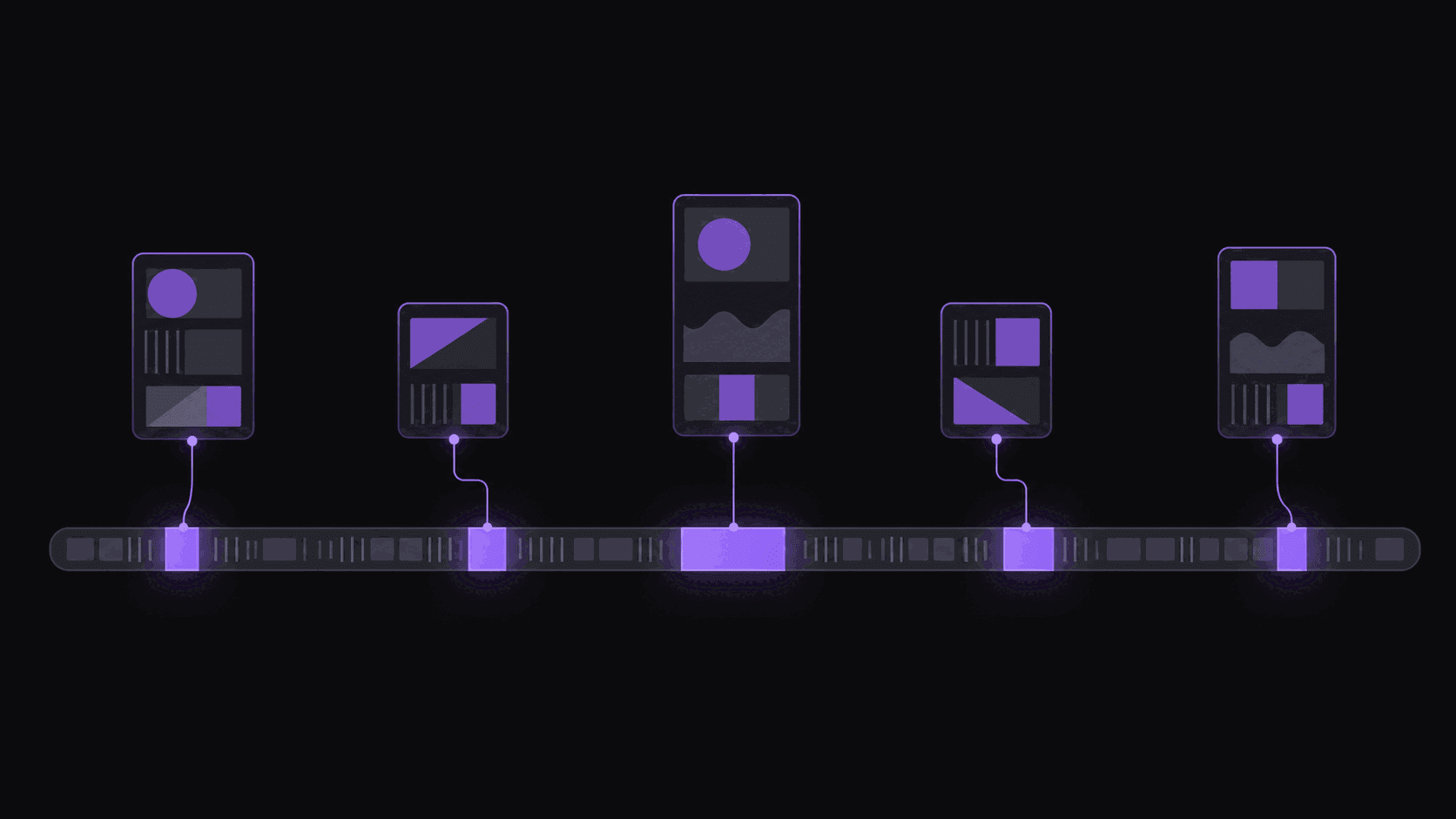
Drop the source in and you get a shortlist back with the moments that read as significant, already reframed to 9:16 and captioned word-by-word. A typical video takes about 5 minutes; a long interview or a multi-hour livestream takes proportionally longer. Around 9 clips come back per source.
Multi-speaker interviews are the common case in this niche, and cuts land on speaker changes rather than mid-sentence, with framing following whoever is talking. That is the difference between a clip that looks edited and one that looks truncated.
What it will not do is know that a particular reference will detonate with your specific audience because of something that happened in the scene last week. Music is an unusually context-heavy niche. Expect to add manual picks, and treat the shortlist as a time saver rather than an editorial replacement.
More at the music use case and the music interview clip channel guide.
The Operational Setup
Monitor the public YouTube channels of the interview shows, podcasts, and reaction creators you clip so new uploads enter the queue automatically. Starter monitors 1 channel, Pro 3, Scale 10.
One credit equals 1 source minute, so a 90-minute interview costs 90 credits against 200 a month on Starter, 500 on Pro, and 1,200 on Scale. Source length caps are 2 hours on Starter, 5 on Pro, and 10 on Scale.
If you add background music to your own clips, Pro includes a music option along with B-roll and spoken hooks, and using cleared audio rather than a commercial track is the entire point. See copyright-safe music for clips.
One tradeoff worth stating: this niche has a lower ceiling than gaming or podcasts if you play it safe, because the highest-reach music content is exactly the material you cannot post cleanly. Channels that accept a narrower band of sources grow more slowly and get claimed less. Channels that chase performance footage grow faster and earn nothing. Pick knowingly.
Frequently Asked Questions
You can post them, and they will usually be matched. The common outcome is that revenue routes to the rights holder rather than the clip being removed, and on some platforms the audio is muted instead. Build the channel on speech-driven sources and treat any music-containing clip as unmonetizable.
Frequently, if the underlying track is audible for a meaningful stretch. Reactions where the creator talks over most of the song, or pauses it to comment, fare better than ones that play it through, though nothing is guaranteed.
25 to 50 seconds. Long enough to deliver a complete thought from the artist, short enough to hold completion rate. Anything under 20 seconds rarely carries enough substance for an interview moment to land.
The interview and analysis side is underserved and produces genuinely quotable material. The performance-footage side is crowded and mostly unmonetizable due to matching. If you enter, enter on the speech side, and read the [music reaction clip channel guide](/blog/music-reaction-clip-channel-guide) first.
Related Articles
See also
Find the Quotes, Not Just the Songs
Drop in a music interview or reaction video and get speaker-framed, captioned vertical clips back in around 5 minutes.
Get started for free