Finding the Moment Is the Job: AI vs Manual Skim
Updated
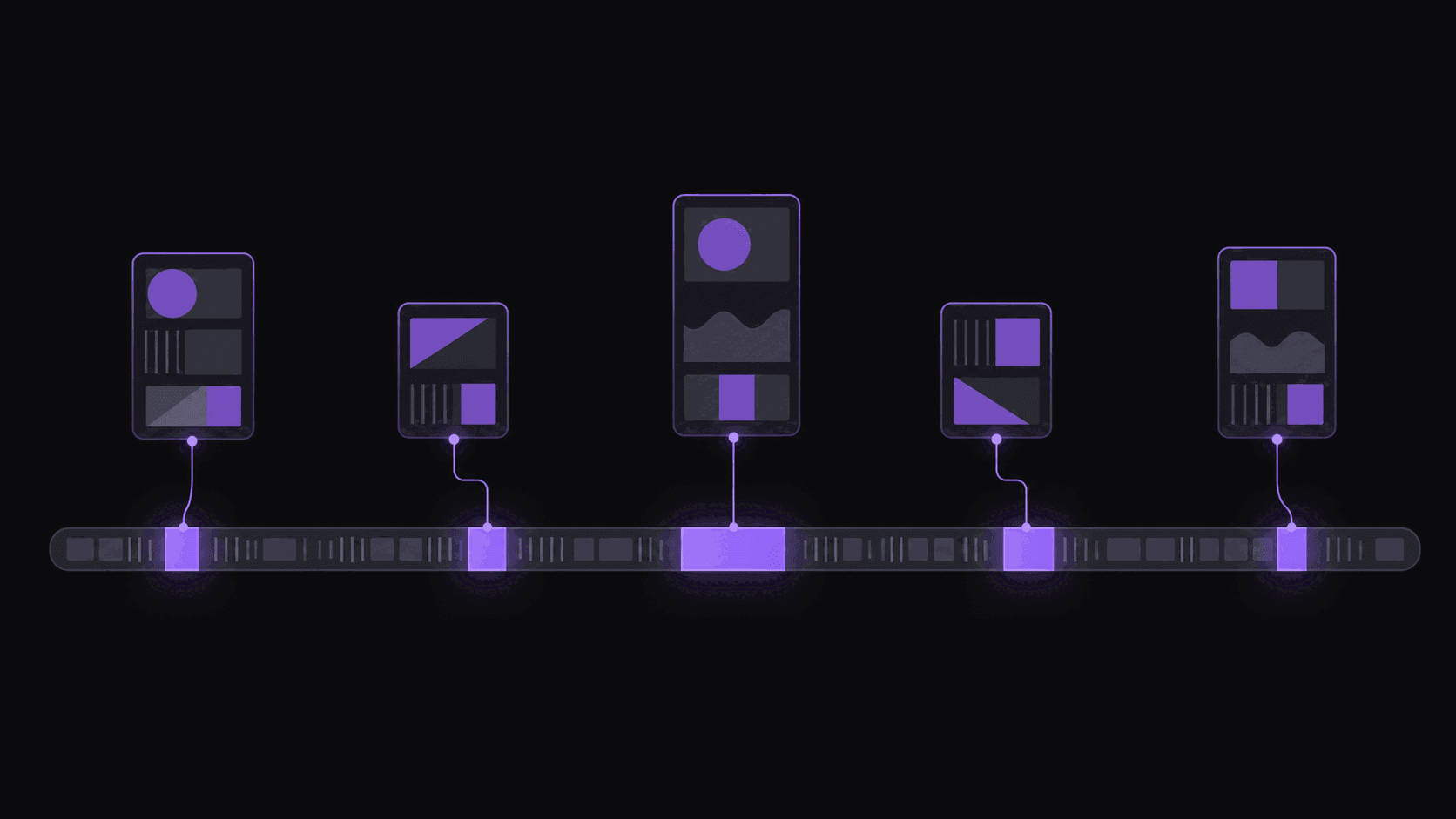
The step everyone underestimates
Ask a clipper how long a clip takes and they'll tell you fifteen minutes. That's the cutting, captioning, and exporting — the visible work.
The invisible work is deciding which fifteen minutes. On a two-hour podcast, an experienced person skimming at 2x with a transcript open spends 45 to 90 minutes before the first cut. On a six-hour stream, longer. That step doesn't produce a file, doesn't feel like progress, and eats more of your week than everything else combined.
So the honest comparison isn't "AI clipping vs editing by hand." It's what happens to that hour.
The math, laid out
Take a channel publishing 20 clips a week from long-form sources.
Manual. Say five sources a week. Skim at 45 minutes each: 3.75 hours. Cut, caption, and export 20 clips at 12 minutes each: 4 hours. Scheduling and posting: 1 hour. Call it 8.75 hours a week, most of it before any editing starts.
Automated selection. The same five sources get processed without you watching them; you review a scored shortlist at about 8 minutes per source (~40 minutes), tweak hooks and captions on the 20 you keep at 4 minutes each (~1.3 hours), and posting is scheduled with the batch. Call it 2 to 2.5 hours a week.
Six hours back, and the six hours you get back are the tedious ones. That's the entire pitch, and it's worth being precise about it rather than claiming clips appear from nowhere — you still review, you still write hooks, you still reject the duds.
On wall-clock time, a typical video comes back in about 5 minutes. You're not sitting there for it; it's running while you do something else, which is a different kind of saving than the labor number above.
Where automated detection actually fails
Four failure modes, all real.
Context-dependent humor. A callback to something forty minutes earlier reads as a normal sentence to any system scoring the moment in isolation. Human clippers who know the show catch these; automation doesn't.
Slow burns. A story that's only good because of a three-minute build gets scored on its individual lines. The payoff clips fine; the build doesn't come with it.
Visual-only moments. If the value is entirely in what's on screen and nobody says anything about it, a transcript-driven shortlist won't rank it.
Niche jargon. Specialist vocabulary — competitive gaming terms, medical or finance language — gets transcribed imperfectly and scored conservatively.
None of these are fatal. They're the reason the review step exists. You'll also want to fix names and terms in the captions on jargon-heavy sources, which is a two-minute job per clip, not a reason to go back to scrubbing.
Where skimming still wins
You know the source cold. If it's your own podcast and you remember the good parts as you record, you don't need a shortlist — you need a cutting tool.
One clip, high stakes. A single hero clip for a launch deserves a human watching the whole thing. Volume tooling optimizes for throughput, not for the perfect cut.
Sources with almost no speech. Music, ambient, or purely visual content gives a transcript-driven system very little to work with.
Very short sources. Under fifteen minutes, skimming is fast enough that automation saves you almost nothing.
The pattern: automated selection wins on volume, unfamiliar sources, and long runtimes. Manual skimming wins on familiarity, small batches, and short sources. Most channels are the first case, which is why the tooling exists at all. AI clipping vs manual clipping compares the full workflows side by side.
The hybrid most working channels land on
Almost nobody runs pure automation or pure manual after a few months. The stable setup:
Let the tool process everything and rank it. Review the shortlist with the score breakdown visible — AutoClip shows a five-criterion breakdown, so you can see why a clip scored the way it did rather than trusting a number. Keep the clear winners, kill the rest, and hand-scrub only when a source is unusually important or you have a reason to think the shortlist missed something.
That gets you volume without ceding editorial judgment. It also means your taste stays in the loop, which is the actual difference between a clip channel with a voice and a feed. If you want to know what the scoring looks at, clip virality signals breaks down which ones correlate with performance.
Frequently Asked Questions
For a two-hour podcast, 45 to 90 minutes at 2x with a transcript open. For a six-hour stream, longer — and it's the least enjoyable part of the process, which is why it's the step people quietly stop doing consistently.
About 5 minutes for a typical video, running in the background. Multi-hour sources take proportionally longer. Your own time goes into reviewing the shortlist, not watching the source.
Often, not always. Expect to reject some of what comes back — the review step is real work, just much less of it. Context-dependent jokes and slow-burn stories are the reliable misses.
When you already know the source, when you need one perfect clip rather than twenty good ones, when the source is under fifteen minutes, or when the value is visual with little speech.
Yes — scores come with a five-criterion breakdown rather than a single opaque number, which makes it much faster to tell a genuine winner from a clip that scored well on one axis and poorly everywhere else.
Related Articles
Get the hour back
Submit a long source and review a scored shortlist instead of scrubbing at 2x — around nine clips per typical video, ready in about 5 minutes.
Get started for free