Short-Form Video Automation in 2026: How Creators Scale Without Burning Out
Updated
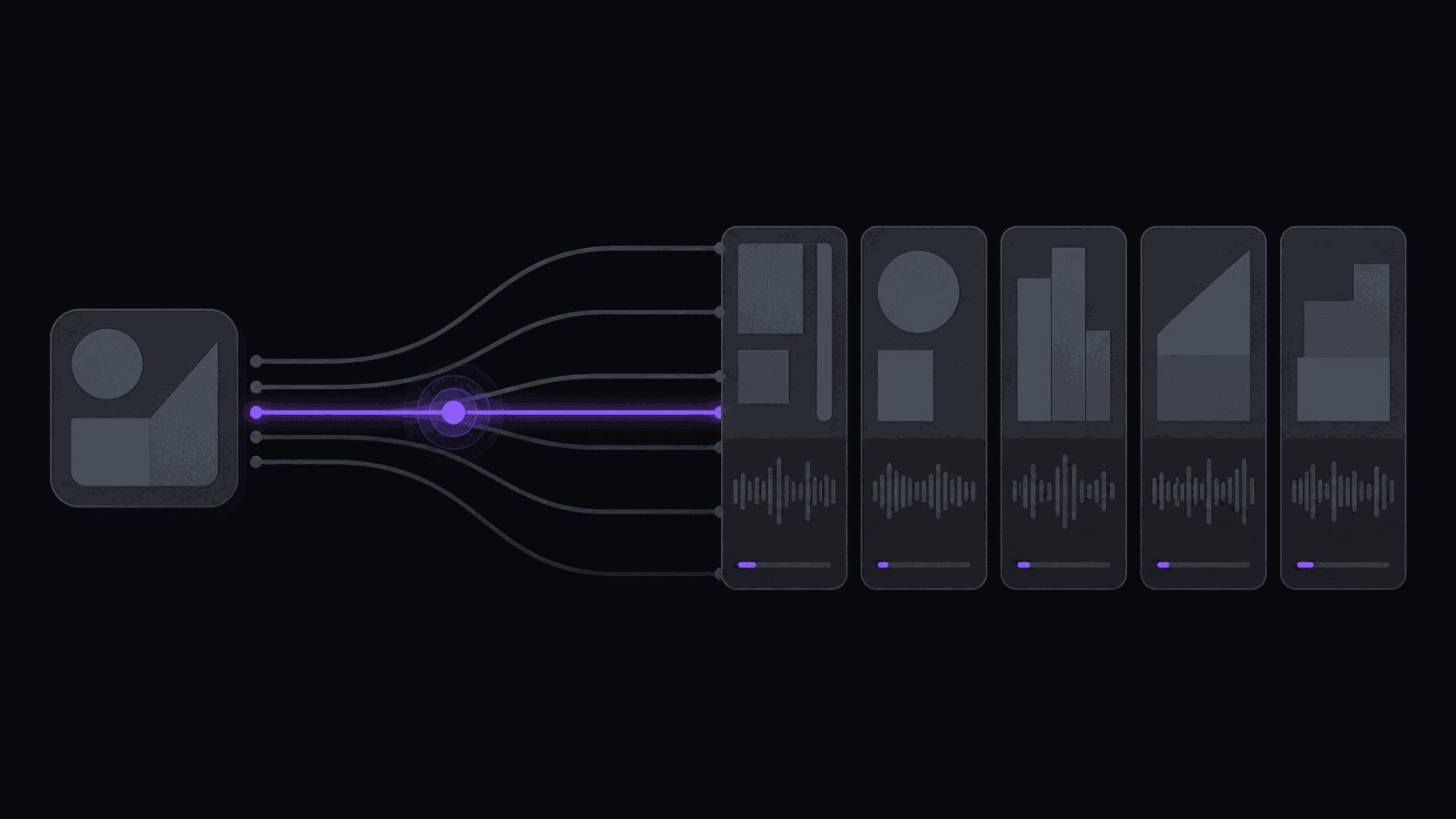
Short answer: what does a short-form automation stack look like in 2026?
A working stack has three parts: a source of long-form footage, an AI tool that cuts and captions clips from it, and a scheduler that publishes to every account. In 2026 the second and third are usually one product, which is the main change from 2024-era setups.
Automation does not create demand. It raises how many attempts you can publish per week and keeps the format consistent; the source material still decides whether anything lands.
Key takeaways
Step 1: Pick the source before the tooling
Decide what footage the stack will run on before you buy anything, because source length and audio quality determine which plan and which tool actually work.
- Step 1. Choose two to four source channels or a recurring recording of your own.
- Step 2. Check the typical runtime against plan caps of 2, 5, or 10 hours.
- Step 3. Connect the destination accounts you will actually maintain, not all nine by default.
- Step 4. Run one real video end to end and time your approval pass.
- Step 5. Fix the posting cadence, then leave it alone long enough to read rolling averages rather than single-clip results.
What "Automation" Actually Means for Short-Form Video
In 2026, automation in short-form video means two connected things: AI-driven production (finding and assembling clip candidates from long-form source content) and automated distribution (scheduling and posting those clips across platforms without manual uploading). Both are required for the workflow to be genuinely automatic. Either one alone is a half-measure.
What automation does not mean: generating video from scratch without source content, fully replacing human judgment in the production process, or guaranteeing any specific performance outcome. Automation compresses the time between raw footage and posted clip. It does not guarantee what happens after the clip goes live.
For creators managing multiple channels, multiple content types, or both, the constraint is almost always time and attention, not talent or ideas. Automation addresses the time and attention problem specifically. It does not help with finding ideas or developing talent — those remain human inputs.
The 2026 Automation Stack: What Serious Creators Are Actually Using
The workflow that has become standard for creators producing consistent volume in 2026 has four components:
Source [channel monitoring](/blog/channel-monitoring-explained). Rather than submitting individual video URLs for processing, automated channel monitoring watches source channels and triggers processing automatically when new content appears. This runs continuously without any daily action from the creator.
AI moment selection with semantic analysis. First-generation clip tools used audio energy detection to find highlights. Current tools analyze semantic content — what is being said, not just how loudly — producing moment selections that are more accurate for content types where the best moments are not the loudest ones. Interview content, educational video, and narrative content all benefit from this improvement.
Vertical formatting pipeline. 9:16 reframing with speaker tracking, synchronized caption generation, and platform-specific output formatting happen automatically on each clip candidate. The output files are ready to post without additional processing.
Connected posting schedule. Approved clips move directly into a platform-specific posting queue. The schedule handles timing, spacing, and account distribution. The creator's interaction with this layer is limited to setting the cadence preferences once.
The interaction model that results: source content is published on your primary platform, clips appear in your approval queue within one to two hours, you spend five to fifteen minutes reviewing candidates, and the approved clips post over the following days according to your schedule.
The Three Bottlenecks That Automation Does Not Solve
Understanding what automation cannot do for you is as important as understanding what it can.
Source content quality. Automation finds the best moments in whatever you give it. If the source content has few strong standalone moments — because the format requires extended context, because the audio quality is poor, because the content does not have natural topic transitions — automation will produce a smaller and weaker candidate set. The quality of input determines the ceiling on output. No automation compensates for thin source material.
Platform-specific strategy. Automation distributes the clips you approve to the platforms you connect. It does not make strategic decisions about which platforms deserve investment, how to grow an account on each platform, or when to lean into a trending format versus your standard content. Those decisions remain yours.
Audience relationship. Comments, replies, and community engagement on short-form platforms are not automated in any sustainable or ethical way. The clips themselves can be fully automated; the conversation around them is not. Creators who try to automate engagement as well as production typically discover that algorithmic suppression or community backlash is a faster outcome than audience growth.
Scaling Short-Form Output Without Proportional Time Investment
The math that makes automation compelling: manual production of one short-form clip from long-form content takes forty-five minutes to two hours depending on editing speed and platform requirements. Automated production of one clip, once the workflow is configured, takes thirty seconds of approval time.
At that ratio, the creator who was previously publishing five clips per week from three hours of work can publish twenty-five clips per week from fifteen minutes of approval time. The output scales; the time investment does not.
This changes what it means to be "consistent" on short-form platforms. Consistency used to require daily time investment. With automation, it requires a reliable source of long-form content — which most creators in this space already have — and a configured pipeline that processes it.
The compounding effect: more clips produce more data about which types of moments perform well for your specific audience on your specific accounts. That data informs better source content, which produces better clips. The feedback loop requires volume to be useful — which is exactly what automation enables.
Building the Workflow: The Right Order
The order that works:
1. Connect two or three source channels first. Running the full automation stack on one channel lets you calibrate the approval queue before you are managing volume from five or ten channels.
2. Set a conservative posting schedule. Start at three to four clips per day per platform, not the maximum the system supports. You are learning what performs, not optimizing for volume yet.
3. Spend the first two weeks in the approval queue actively. Even if you trust the AI, review everything yourself in the first two weeks. You will develop intuition about what the AI consistently gets right and wrong for your content type. That intuition is how you calibrate the settings.
4. Add channels and increase cadence after four to six weeks. Once the workflow is stable and the quality threshold is calibrated, adding channels scales output without proportional time investment. This is the unlock moment — when the per-clip time investment drops below five minutes of total human time.
5. Review performance data weekly. Short-form platform analytics tell you which clip types generate the most replays, shares, and follows. Feed that back into content decisions. Automation without data review is production without strategy.
Frequently Asked Questions
Short-form video automation refers to using AI-powered tools to automatically find, assemble, and distribute short clips from long-form source content, without manual video editing. In a full automation setup, source channel monitoring triggers when new content appears, AI identifies the best moments, a formatting pipeline produces vertical clips with captions, and a posting schedule distributes approved clips across platforms.
For creators producing consistent clip volume, the time savings are significant. Manual production of one short-form clip typically takes 45 minutes to two hours. Automation reduces the per-clip human time investment to 30 seconds to two minutes of approval queue review. A creator publishing 25 clips per week manually would spend 20 to 50 hours on production; with automation, the same output requires 15 to 30 minutes of approval time.
Not necessarily. AI moment selection quality has improved significantly through 2025 and 2026, and the clips AI tools identify often match or exceed what manual selection would produce, especially at high volume where manual selection quality degrades due to fatigue. The human judgment that remains in the loop — the approval queue review — catches contextual problems that AI misses, maintaining quality control without full manual production.
A single source video can be distributed to TikTok, Instagram Reels, and YouTube Shorts simultaneously from one automation workflow. AutoClip supports multi-platform posting with platform-specific formatting for each destination. The approval queue is unified — you approve once, and the approved clip is distributed to all connected accounts according to their individual posting schedules.
Yes, with one important adjustment: brand accounts typically require a tighter approval process than individual creator accounts. The automation workflow is the same, but the approval queue should be reviewed by someone with authority over the brand's content standards before any clip posts. AutoClip's approval step provides exactly this gate — clips are never posted without explicit review unless you opt into fully automatic publishing.
Related Articles
See also
Build the Full Short-Form Automation Workflow Today
AutoClip handles every step from channel monitoring to posted clip — so you can scale short-form output without scaling your hours. Connect your first channel and run your first approval queue in under twenty minutes.
Get started for free