Podcast Clipping in 2026: Long Episodes, Short Attention
Updated
The source format is the hard part
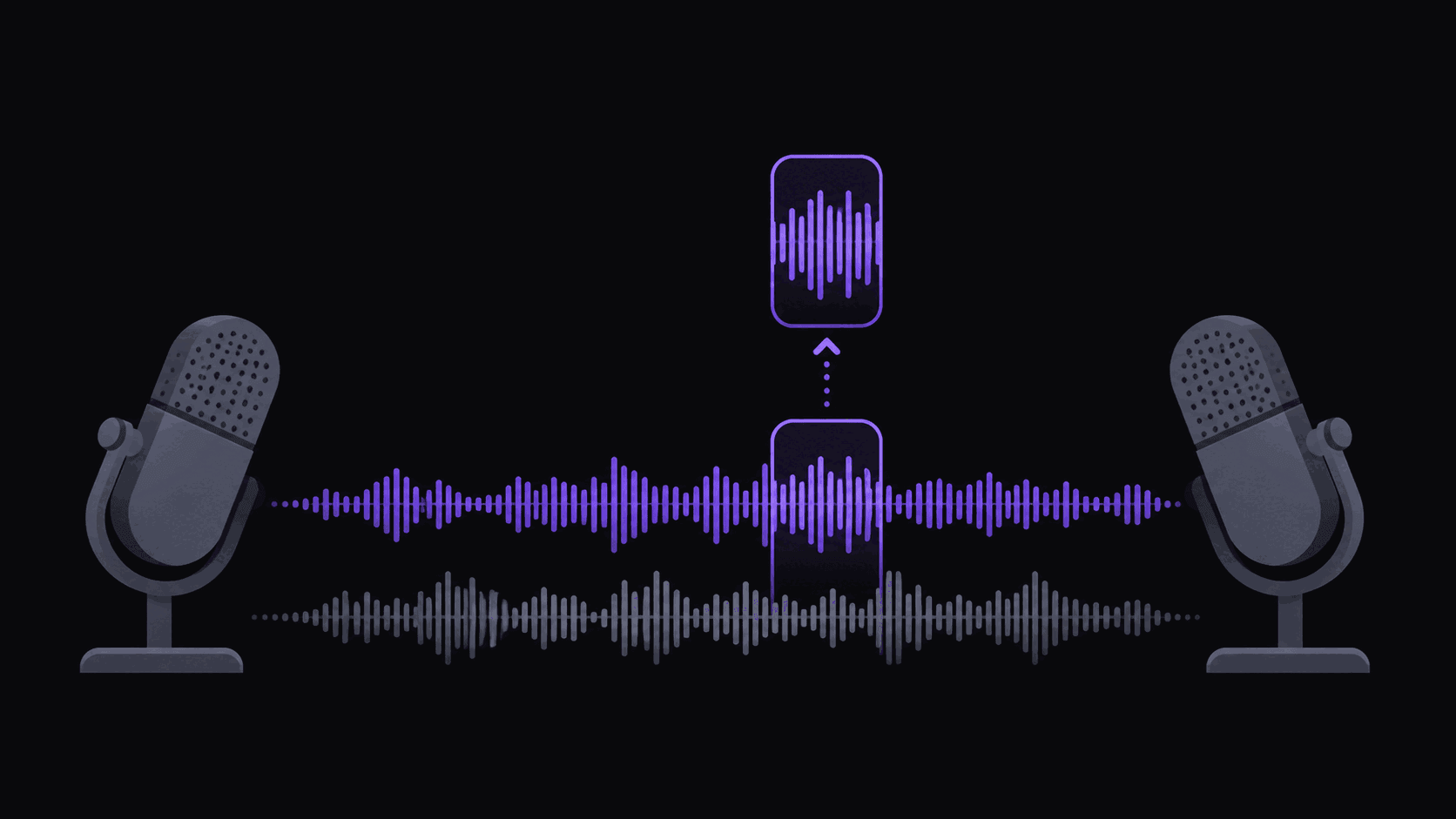
A long-form interview show is the most clippable content that exists and the most annoying to work with. Three hours, two people, one camera setup, no scene changes, and the good parts scattered without pattern — a story at minute 34, a genuine disagreement at 2:11, a throwaway line at 2:48 that outperforms both.
The production values help you. Clean audio, decent lighting, framing that survives a crop. What hurts is density: three hours is 180 minutes of transcript to read, and a human doing that properly is looking at an afternoon per episode.
The upside is that when it works, it really works. podcast clips have some of the strongest short-form retention of any content type, because a well-chosen moment is a complete idea told by someone who talks for a living.
Where the moments actually are
Patterns hold across shows more than you'd expect.
Stories with a turn. A guest telling something that happened to them, with a reversal in the middle. Self-contained, emotionally legible, no context required.
Real disagreement. Not staged conflict — the moment the host actually pushes back and the guest recalculates. Comment sections live on these.
The compressed explanation. A complicated thing explained in forty seconds by someone who's explained it a hundred times. These are the clips that get saved and re-shared.
Numbers and specifics. A concrete figure or a named study anchors a clip in a way that opinion doesn't.
What consistently underperforms: intros, plugs, anything mid-argument that needs the previous five minutes, and any clip where you have to explain who's talking. If nobody can follow it cold, it isn't a clip.
Cuts matter as much as selection. A cut that lands on a speaker change reads clean; a cut that lands mid-sentence reads broken, even when the content is identical. On multi-speaker sources AutoClip places cuts on speaker changes rather than fixed intervals, which is most of the difference between a clip that feels edited and one that feels chopped.
Where to send them
Don't pick one platform. The same clip behaves differently in three places and you have no reliable way to predict which one it'll do best on.
TikTok rewards a hard hook in the first two seconds and is the most forgiving of a channel with no history. It's also the most volatile.
YouTube Shorts rewards clips that lead somewhere — viewers actually click through to the full episode, which is why podcast owners care about it most.
Instagram Reels skews toward polish and saves, and does disproportionately well with the compressed-explanation format.
Post to all three on a spaced schedule and let the data tell you where your channel lives. AutoClip handles the fan-out to 9 destinations, and the platform distribution comparison covers the differences in more depth. Clip length varies by destination too — best clip length for each platform has the working ranges.
The end-to-end workflow
For a weekly show, the version that holds up:
Monitor the channel so new episodes get clipped as soon as they publish — no submission step, no forgetting. A typical video comes back in about 5 minutes with around nine clips; a three-hour episode takes proportionally longer, and that's worth being clear-eyed about rather than pretending every job is instant.
Review the shortlist against the score breakdown, keep the four or five that stand alone, rewrite the hook line on each. Then schedule them across the week instead of dumping all five on Tuesday — a clip posted alone gets a fair test; five posted together compete with each other.
On credits: one credit is one source minute, so a three-hour episode is roughly 180 credits. That makes Pro's 500 credits the realistic tier for a weekly long-form show, with Scale's 1200 for anyone running several. Pro also unlocks sources up to five hours, which matters for this format specifically.
Jake, a content creator, grew his views 5x. Results like that aren't typical — what you get out of it depends on your show, the platforms you post to, and how consistently you publish.
Third-party clipping, briefly
If you're clipping someone else's show, the norms are established but not universal: transformative editing, credit the show and the guest in the caption, don't re-upload whole segments, and don't monetize in ways the show has said not to.
Some shows publish clipping guidelines and some run their own campaigns paying for clips. Check before you build a channel on a single show — the rules differ, and the ones that matter are the show's, not the platform's. Fair use for clip channels covers the general shape of the risk.
And the structural advice, same as every other niche: cover more than one show. A channel built on one podcast is a channel with one point of failure.
Frequently Asked Questions
Interview shows commonly run two to three hours, and some go longer. Plans cap source length — two hours on Starter, five on Pro, ten on Scale — so match the tier to the shows you actually cover.
Around nine from a typical video, with longer episodes yielding more raw candidates but not proportionally more good ones. Expect to publish four or five after review.
All three. TikTok is best for cold-start reach, Shorts converts best to the full episode, and Reels rewards the explanation format. Post on a spaced schedule and read your own numbers after a month.
A cut on a speaker change sounds intentional; a cut mid-sentence sounds like a mistake, and viewers register it in the first second. On multi-speaker sources the cuts are placed on speaker changes rather than at fixed intervals for exactly this reason.
Yes, for public YouTube channels — new uploads get clipped without you submitting anything. Starter includes 1 monitored channel, Pro 3, Scale 10.
Usually, within norms: transformative edits, credit in the caption, no full-segment re-uploads, and respect any clipping guidelines the show publishes. Check per show rather than assuming a blanket rule.
Related Articles
See also
Turn a three-hour episode into a week of posts
Monitor your show, get around nine vertical captioned clips per episode with cuts that land on speaker changes, and schedule them across every destination.
Get started for free