How to Use Auto Clip Extraction in AutoClip
Updated
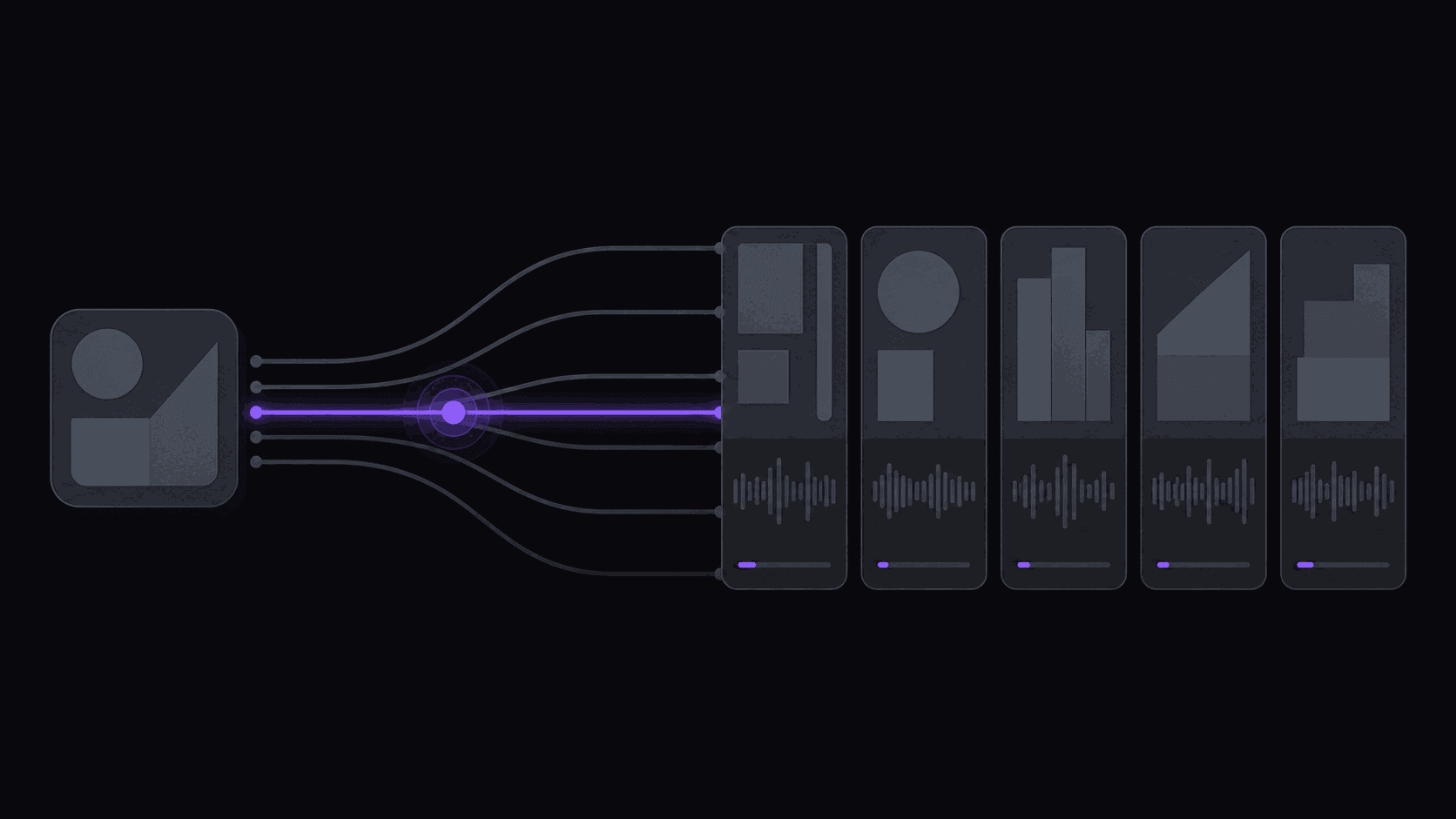
Your first run, start to finish
Pick a source you already know. Not your best-performing video — one where you can name the two strongest moments off the top of your head. You want a run you can grade.
- Paste the URL. A public YouTube, Twitch, or Kick link. Source length limits are 2 hours on Starter, 5 on Pro, 10 on Scale.
- Pick your aspect ratio. 9:16 for TikTok, how long a Short or Reel can be in 2026s, and Shorts, which is what most people want. Pro adds 1:1, 16:9, and 4:5 if you post to LinkedIn or feed placements too.
- Choose a caption style — karaoke, pop, or bounce — or skip it and set one later. If you have a brand kit saved, apply it here and every clip comes out matching.
- Submit and walk away. About five minutes for a typical video; multi-hour sources take proportionally longer. Nothing needs babysitting.
You get back around 9 clips, each with a score and a five-criterion breakdown. Now check your grade: are the two moments you predicted in there? If yes, you can trust the shortlist on sources you have not watched. If no, keep reading — the fix is usually the source, not the settings.
Reading the output without watching all nine
Do not watch every clip start to finish. That defeats the point.
Pass one, three seconds each. Play the first three seconds of every clip and nothing more. You are answering one question: has the interesting thing started yet? If not, that clip needs its front trimmed, which takes ten seconds in the editor. This single pass catches most of the weak output.
Pass two, the score breakdown. Open the top four. The breakdown shows which of the five criteria each clip is winning on. A clip strong on hook but weak on payoff is a good candidate to shorten. A clip strong on payoff but weak on hook needs its opening seconds moved or a spoken hook added.
Pass three, your judgment. Of the four, which two would you post if you had to defend the choice? Post those. Hold the rest — a clip that felt mediocre on Monday often looks fine as a Thursday filler post.
Resist the urge to post all nine. Your channel average becomes the tool's average when you do. How to use the viral prediction score goes further on reading the breakdown properly.
The two adjustments worth making
Most clips need nothing. Two fixes carry almost all the value:
Trim the front. The single highest-return edit. If your clip takes four seconds to get going, cut three of them. Viewers decide in the first second and a half; setup that a human would find polite is dead weight in a feed.
Rewrite the caption text. Auto captions are accurate, but names, product names, and in-jokes get spelled the way they sound. One wrong name in the first line reads as sloppy and costs you more than the time it takes to fix. Scan the first two lines of every clip you actually post.
Beyond that: extend the tail if the reaction lands in the last second, and adjust framing if a split layout put the wrong element on top. Everything else is optional. If you are pushing volume, batch processing YouTube videos covers running several sources at once without the review step falling apart.
Turn it into something that runs without you
Manual submission is fine for a handful of videos a week. Past that it becomes the bottleneck, and monitoring is the fix.
Add a public YouTube, Twitch, or Kick channel to monitoring and new uploads and stream VODs get clipped automatically — no submission, no watching for the notification. Starter monitors one channel, Pro three, Scale ten.
Pair it with scheduling and the loop closes: source publishes, clips get made, clips post to your connected accounts on a spaced schedule. Starter connects 3 social accounts, Pro 8, Scale 25, across 9 short-form destinations. How to schedule clip posts covers spacing that does not look automated.
One caution: unattended does not mean unreviewed. Look at what went out at least every couple of days. Monitoring is very good at keeping the queue full and completely indifferent to whether a given clip should represent your channel. The YouTube channel monitor page has the setup detail.
When the output disappoints
Four causes, in the order they are usually the problem:
Audio. Shared mics, heavy room echo, or constant background music will degrade cut points across every clip. This is the most common cause and the one people check last.
Format mismatch. Heavily scripted, evenly paced narration has no peaks. There is nothing to find. Unscripted conversation, streams, interviews, and reactions are the strong case.
Source density. A two-hour stream with four good moments produces four good clips and five filler ones — and costs you 120 credits. A 25-minute interview with the same four costs 25. Credits are per source minute, so density is money.
Expecting taste. If your complaint is "it did not pick the one I would have picked," that is the shortlist working as designed. It is reliably good at narrowing 120 minutes to twenty candidates and unreliable at ranking the top three. That last call is yours, and it is the part worth your twenty minutes.
Streams are the friendly exception on cost: on Twitch and Kick only top highlight segments bill, so a four-hour stream typically runs 35-90 credits instead of 240. Full plan details on pricing.
Frequently Asked Questions
Public YouTube videos, Twitch VODs, and Kick VODs by URL. Length caps depend on plan: 2 hours on Starter, 5 on Pro, 10 on Scale. Private or unlisted videos are not accessible.
One credit per minute of source video, so a 45-minute video costs 45 credits. Twitch and Kick streams are the exception — only top highlight segments bill, so a multi-hour stream typically runs 35-90 credits. Monthly allowances are 200 on Starter, 500 on Pro, 1200 on Scale.
Yes, but it charges credits again since it is a fresh extraction. If you only want a different caption style or a small trim, edit the existing clips instead — that is free and faster.
No. The 3-day trial runs on Pro, and every paid plan starting at Starter exports watermark-free.
Around 9 from a typical video, capped by plan at 6 on Starter, 12 on Pro, and 15 on Scale. Shorter or less dense sources produce fewer, and that is usually correct rather than a failure.
Related Articles
See also
Try it on a video you already know well
Submit one source, check whether the moments you would have picked are in the output, then decide. The 3-day Pro trial gives you 100 credits to check with.
Get started for free