VTuber Clip Channel Guide: How to Build, Grow, and Automate in 2026
Updated
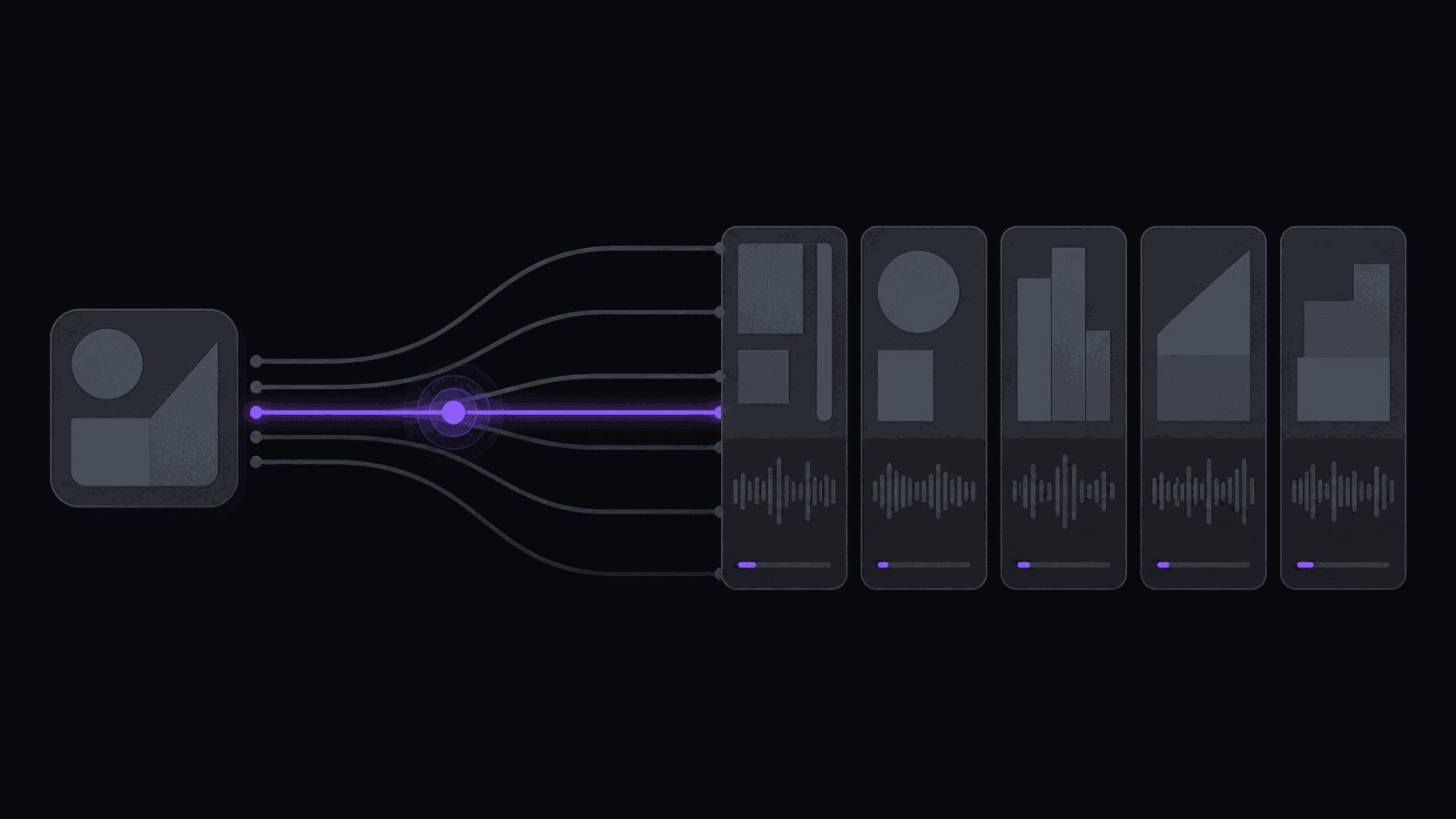
VTuber clipping is the most rule-bound niche in clipping, and that's why it works
Most niches leave you guessing about what's allowed. VTuber agencies publish derivative-works guidelines that tell you, in writing, what you may clip, how long, whether you can monetize, and what you must credit. Read them once and you know exactly where the line is.
That clarity is worth a lot. The flip side is that the rules are real and enforced by communities as much as by companies — post something outside the guidelines and the fans will tell you before the agency does.
The other defining feature: streams are long. Four hours is normal, eight is common, and a single archive can contain a dozen moments worth clipping. The bottleneck is never material. It's the hours you'd spend scrubbing to find the material.
The economics are also unusual. VTuber audiences are extremely loyal to clip channels — many viewers follow specific clippers rather than searching by talent — but the audience per talent is smaller than a comparable Twitch streamer's. You grow by depth, not breadth.
Choosing talents to cover
Three factors decide whether a talent is worth building around, and only one of them is size.
Guideline permissiveness. Different agencies allow different things. Some permit monetized clips freely, some require the clip stay under a length, some restrict certain content categories entirely. Check before you invest weeks in a talent, not after.
Clip density. Some talents produce a big reaction every ten minutes. Others do four-hour chill streams with three genuine moments. Both are enjoyable to watch; only one supports a channel.
Existing clipper coverage. A talent with thirty active clip channels is a hard place to start. The best position is a talent with an engaged audience and two or three clip channels — enough to prove demand, not enough to saturate it. Rising talents below the 30k-subscriber line are the classic entry point; clipping VTuber streams and the 30k threshold covers why.
Practical advice: cover two or three talents, not one. Single-talent channels are hostage to that talent's schedule, health, and graduation. Three gives you continuity without diluting your identity.
Translation is the moat
If you clip English-speaking talents in English, you're competing with everyone. If you translate Japanese streams into English — or English streams into Spanish, Portuguese, or Indonesian — the competition drops by an order of magnitude and the audience doesn't.
This used to be the highest-effort part of the niche. It's now the part where a small amount of work goes furthest: caption translation covers 31 languages and AI dubbing 25 on Pro and above, so producing a translated version of a clip is a settings choice rather than a second job. Multi-aspect export means the same clip goes out in 9:16 for Shorts and 1:1 or 4:5 where those perform better.
What you still have to do yourself: check the translation on anything involving in-jokes, memes, or wordplay. Fan communities have established translations for recurring bits, and getting one wrong is the fastest way to look like an outsider. Budget a few minutes per clip for that pass — it's the part that earns you the audience's trust.
The VTuber clip translation workflow goes into the process in depth.
Mining the archive instead of watching it live
The realistic version of this hobby-turned-business: you cannot watch every stream from three talents. Nobody can. Eight hours a day, six days a week, across three people is not a schedule.
So don't. Set up monitoring on the channels you cover, let new archives get clipped without you submitting them, and spend your time reviewing candidates instead of scrubbing timelines. Stream sources are also cheap in credit terms — Twitch and Kick streams bill only on the top highlight segments, typically 35-90 credits for a multi-hour VOD instead of a minute-for-minute count.
A workable daily routine:
- Open the queue of clips from overnight archives
- Keep the ones that made you laugh or react. Trust that instinct; it correlates better with performance than any checklist
- Check translation on the ones with jokes or references
- Schedule across the day rather than posting in a burst
Multi-hour archives take proportionally longer to process than a typical video's five minutes, but the work happens without you. Stream archive mining techniques has more on selection.
Thumbnails and titles in a niche with visual conventions
VTuber clip audiences expect a specific look, and deviating from it reads as inexperience rather than originality.
What the convention looks like: the talent's model prominently placed, an expressive face, large readable text, and the talent's name plus the agency spelled correctly. Fans scroll by model recognition first and text second.
Titles: put the emotional beat in, not a summary. "She did NOT expect that" outperforms "Reacting to a superchat." Include the talent's name for search, because a large share of discovery in this niche is people typing a talent's name into YouTube and browsing whatever comes back.
If you're translating, mark the language clearly — [ENG SUB] or the equivalent — because that tag is what a non-Japanese-speaking viewer is scanning for.
VTuber clip thumbnail design covers the visual side properly.
Monetization and what it costs to run
Monetization depends entirely on the agency's guidelines, which is why you read them first. Where monetized clips are permitted, YouTube ad revenue is the primary path, and VTuber clip audiences watch to completion at rates most niches envy. Memberships and merch work for established channels. Content-reward campaigns work regardless of channel size.
What not to do: monetize where the guidelines say you can't, use the talent's model in merch, or reupload full streams. Any of those ends the channel, and the community will report it before the agency notices.
Costs: covering three talents streaming several hours a week fits comfortably in Pro at $39.99/mo (500 credits, three monitored channels, caption translation in 31 languages and AI dubbing in 25 of them, multi-aspect export, sources up to five hours). Scale at $79.99/mo adds ten monitored channels, 4K export, and priority processing if you expand past three talents. Starter at $19.99/mo (200 credits, one monitored channel) is enough to cover a single talent and find out whether you like the work — though translation lives on Pro. See pricing.
Frequently Asked Questions
Most agencies publish derivative-works guidelines that grant blanket permission within stated limits. Read the specific agency's terms for the talent you're covering — they differ meaningfully on length, monetization, and content restrictions.
Often yes, within the agency's rules. Some allow full monetization, some cap it, some prohibit it for particular content types. The rules are published; check them per agency rather than assuming the niche has one standard.
It's the single biggest differentiator available. Translated clips face a fraction of the competition and reach an audience that has almost no alternative source. Caption translation in 31 languages and dubbing in 25 of them are available on Pro and above.
Two or three. One leaves you exposed to a single schedule and to graduation announcements. More than three dilutes your channel identity and you'll never clear the queue.
Longer than a typical video, which comes back in around 5 minutes — multi-hour archives scale roughly with length. The relevant comparison is against manually scrubbing eight hours yourself, which is most of a day.
For the largest English-speaking talents, yes. For mid-tier talents, non-English talents, and translation work into languages other than English, it's noticeably thin. Pick your entry point accordingly.
Related Articles
See also
Automate your VTuber clip channel
Monitor the talents you cover, get clips from overnight archives waiting in the morning, and translate captions into 31 languages on Pro.
Get started for free