TikTok vs YouTube Shorts CPM: 2026 Comparison for Clippers
Updated
The headline comparison, and why it misleads
Effective payouts on YouTube Shorts land around $0.10 to $0.30 per thousand views for general content, climbing to $0.30 to $0.80 in niches with strong long-form audience overlap. TikTok's rewards program pays roughly $0.40 to $1.20 per thousand on qualifying content.
Read those two numbers and TikTok wins by three to four times. Then look at what a clip actually does on each platform: the same clip on an established channel typically pulls two to four times more views on Shorts than on TikTok.
Run it through: a clip at 50,000 Shorts views and $0.20 effective earns $10. The same clip at 12,000 TikTok views and $0.80 earns $9.60. The gap that looked decisive collapses to nothing.
Those are worked examples, not a forecast — what you actually earn moves with your niche, your audience's geography, which campaigns you post to, and how consistently you publish.
Still, it's the single most useful thing to internalize before you pick a platform to focus on. Per-view rate and view volume move in opposite directions, and they roughly cancel. Which means the platform choice is not really a revenue decision — it's a risk and eligibility decision.
Niche moves the number more than platform does
Finance and business clips earn three to five times what gaming clips earn per thousand views. That's on either platform. The niche spread is larger than the platform spread, and it's larger than almost any optimization you can do to a clip.
What that means practically: if you're choosing between a gaming niche on the higher-paying platform and a finance niche on the lower-paying one, take the finance niche. The audience quality difference outweighs the payout program difference, and it isn't close.
The caveat is that high-payout niches are high-payout because they're harder. Finance sources are scarcer, the audience punishes sloppy context-free clipping, and the growth curve is slower in the first three months. Gaming gives you views quickly at a lower rate per view. Pick the one you'll still be doing in six months, because neither pays anything to a channel that stopped posting.
Geography compounds this. US, UK, Canada, and Australia audiences pay several times what South and Southeast Asian audiences pay on both platforms. If your audience skews toward low-payout regions, you need multiples more volume for the same income — which is worth knowing before you conclude your niche doesn't monetize.
Eligibility is where the real difference lives
TikTok's rewards program requires a follower threshold and a rolling 30-day view minimum, plus a one-minute length floor on qualifying videos. YouTube's Shorts revenue sharing requires Partner Program status, which you reach either through long-form watch hours or through a large Shorts view total in a 90-day window.
For a clipper starting from zero, TikTok is usually reachable first. For anyone who already has a YouTube channel with long-form history, Shorts is instant and TikTok is the one you have to earn.
That asymmetry, not CPM, should drive your sequencing. Start where you're already eligible or nearly eligible, because unmonetized views are worth zero regardless of what the rate card says.
One consequence of TikTok's one-minute floor deserves emphasis: a 40-second clip that crushes on retention may earn nothing from the rewards program while a mediocre 65-second clip earns. If TikTok payouts are a real part of your plan, that constraint should shape how you cut. Clip length by platform goes deeper on the trade.
Payment mechanics, sponsorships, and seasonality
Both platforms pay monthly. YouTube's payout arrives faster after month end; TikTok's dashboard gives you better day-to-day visibility into what you're accruing. Failures are rare on either side for accounts in good standing. This is not a decision axis.
Sponsorship rates are a decision axis, and they favor YouTube. A 100K-subscriber Shorts channel typically commands more per sponsored post than a 100K-follower TikTok account, often by roughly double. Brands read a YouTube audience as older, more searchable, and more durable. Whether that read is correct matters less than the fact that it sets the rates. If you're pitching sponsors, lead with your Shorts numbers.
Seasonality hits both: Q4 rates run well above Q1 as holiday ad budgets land. If you have flexibility in when you push production hard, weight it toward the back half of the year. It's one of the few free multipliers available to a clipper.
And for completeness on the third platform: Reels pays less than either per view in 2026. Its value is reach and cross-promotion, not direct income. Post there, just don't plan a business on it. The full three-way breakdown is in YouTube Shorts vs TikTok vs Reels.
The answer for almost everyone: both
The audiences barely overlap. A viewer who follows your TikTok mostly does not follow your Shorts channel. So the second platform is not cannibalizing the first — it's additive, and the clip is already made.
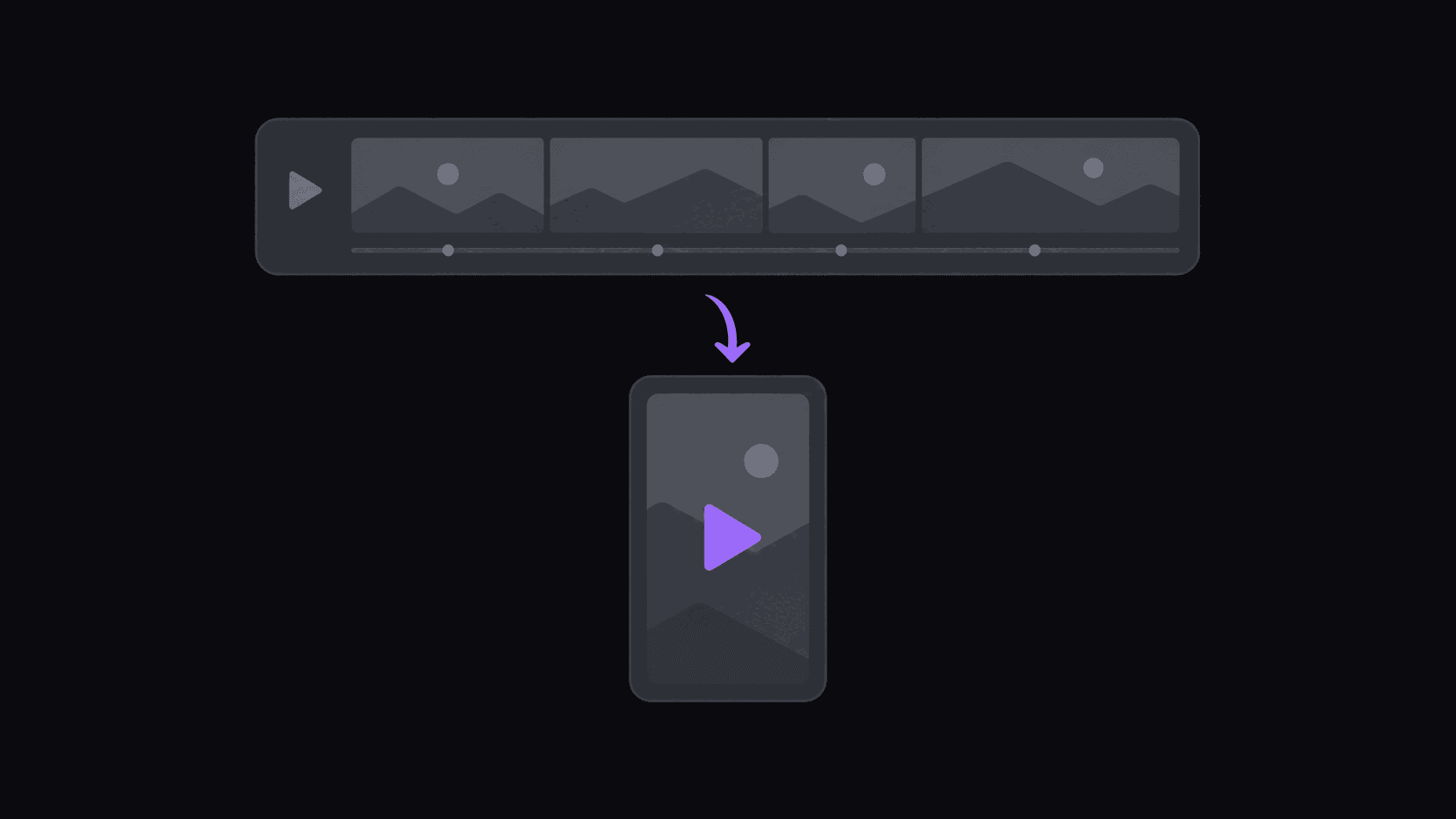
The reason people don't do it is friction. Re-uploading every clip to a second and third destination with platform-appropriate titles and sensible spacing is exactly the kind of tedious work that gets skipped on a busy day, and skipped days become a dead channel.
This is the part AutoClip handles: connect your accounts once and clips get queued to 9 short-form destinations on a spaced schedule, with the same source moment reaching TikTok, Shorts, and Reels without a manual re-upload. Starter includes three connected social accounts, Pro eight, Scale 25.
The honest limit worth stating: cross-posting to different platforms is fine, but cross-posting the same clip to several accounts you control on the same platform is not — duplicate detection is aggressive and the second account pays for it. Cross-posting without a shadowban covers where that line sits.
Frequently Asked Questions
Both, in parallel, unless you only have time for one — in which case start with whichever monetization threshold you can reach sooner. That's usually TikTok if you're starting from zero and YouTube if you already have a channel with long-form history.
No. Per-view payouts on Reels run below both TikTok and Shorts. Treat Reels as a reach and discovery channel that occasionally surprises you, not as an income line.
Meaningfully. Fourth-quarter rates run well above first-quarter rates on both platforms because advertiser budgets concentrate around the holidays. If your production capacity is flexible, front-load it into the back half of the year.
Starter is $19.99/mo, Pro $39.99/mo, Scale $79.99/mo, with annual billing cutting each by 40%. Before that, the 3-day Pro trial gives you 100 credits — about 100 minutes of source video, exported without a watermark — so you can see whether your niche produces clips worth posting.
Related Articles
See also
Post once, earn on both
AutoClip queues every clip to TikTok, Shorts, Reels, and 10+ more destinations on a spaced schedule. No second upload.
Get started for free