Short-Form Video Trends Worth Acting On in 2026
Updated
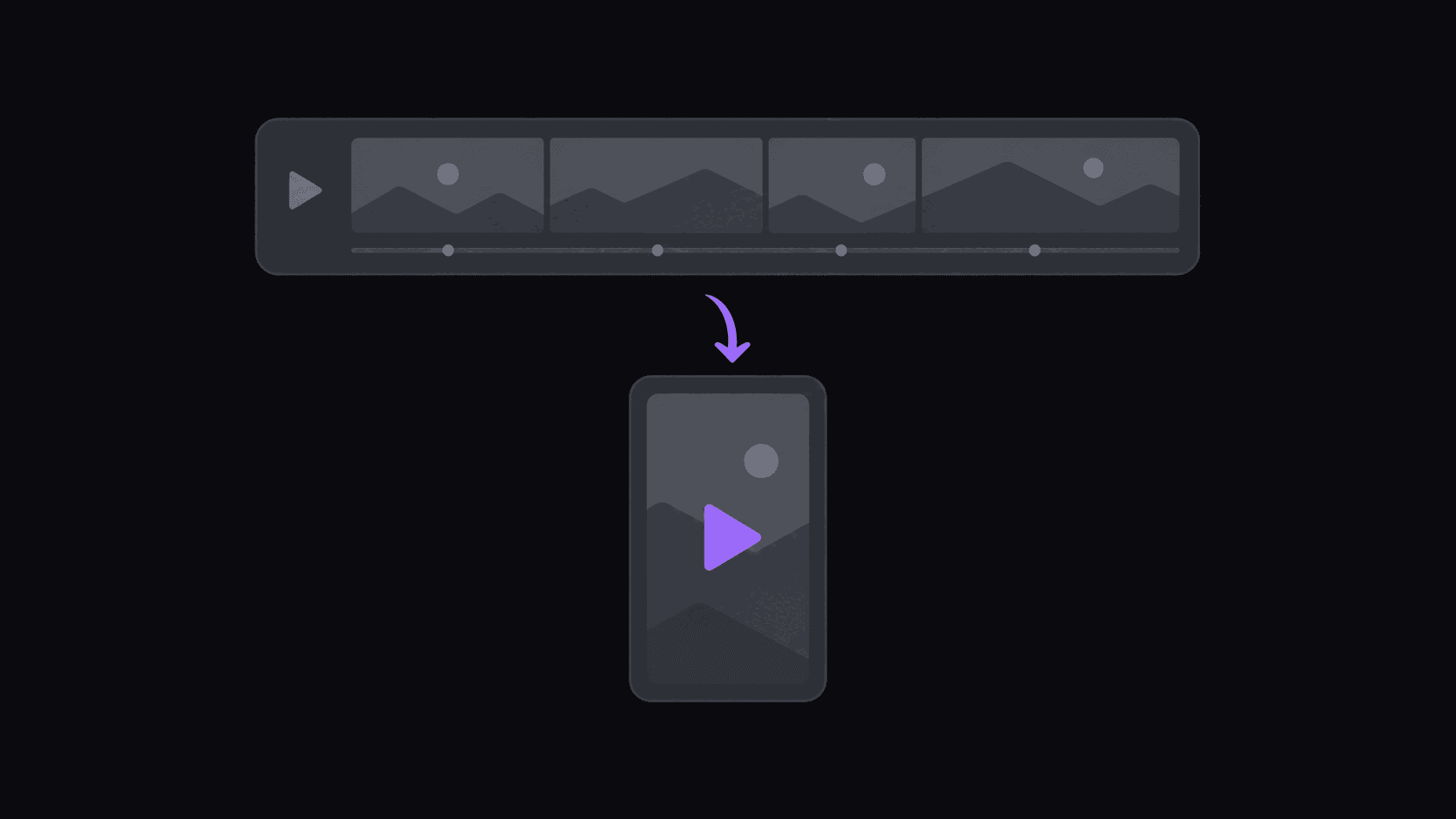
Longer Shorts Stopped Being a Bad Idea
For years the received wisdom was: shorter is safer. Under 30 seconds, ideally under 20, because completion rate rules everything.
That's no longer the whole story. The ceilings moved: on YouTube, any square or vertical upload posted on or after 15 October 2024 and running up to three minutes is classified as a Short (Source: YouTube Help, 2026-09). Clips in the 60-90 second range regularly outperform their compressed versions when the material justifies the runtime. The operative phrase is when the material justifies it — a 25-second moment padded to 70 seconds still dies.
One hard constraint survives the longer ceiling. A Short over a minute carrying an active copyright claim is blocked globally until the claim clears, and YouTube's own Audio Library caps most tracks at 90 seconds within a three-minute Short, with some limited to 60 or 30. So if a clip carries licensed music, keep it under 60 seconds regardless of how good the longer cut is.
The practical change: stop trimming good moments to hit an arbitrary ceiling. Cut to where the payoff ends, then check the number. If a longer cut holds its completion rate, keep it.
What hasn't changed is the front of the clip. The first second and a half still decides most outcomes, whether the clip runs 18 seconds or 90.
Search Is Eating Discovery
A growing share of short-form views arrive through in-app search rather than the main feed. People type things into TikTok and YouTube the way they used to type them into Google.
This makes your title and on-screen text meaningful in a way they weren't in 2022. A clip titled "insane moment" is invisible to search. A clip titled with the guest's name, the topic, and the claim is findable for months.
Two habits worth adopting:
- Put the searchable words in the title and in the first line of on-screen text. Both get indexed.
- Accept that the searchable title is often less punchy than the clickbait one. Split the difference: searchable words up front, punch at the end.
The upside is that search-driven views have a much longer tail than feed views. Feed distribution is measured in days; a search-findable clip keeps surfacing for as long as people are looking for the topic. That changes clip shelf life enough to be worth restructuring your titling around.
Sound-Off Is the Default Assumption Now
A large share of your viewers never hear a word. This isn't new, but the tolerance for uncaptioned content has collapsed — an uncaptioned clip now reads as low-effort even to people watching with sound on.
Word-synced animated captions are the baseline, not a differentiator. What differentiates in 2026 is caption design: legible at thumbnail size, consistent across every post so your channel is recognisable, positioned to survive platform UI overlays covering the bottom third.
The mistake to avoid is over-decoration. Emoji and animation help pacing when they punctuate something; wall-to-wall they become noise you scroll past.
Multi-Language Distribution Went Mainstream
Translating and dubbing clips used to be a specialist workflow reserved for large channels. It's now a normal thing for a solo operator to do, and the arbitrage is still open: a moment that has saturated its English audience is often brand new to a Spanish, Portuguese, or Hindi-speaking one.
On AutoClip this sits on Pro and above — caption translation in 31 languages and AI dubbing in 25 of them. The strategic point is bigger than any tool: your existing library has a second audience you have not shown it to.
The honest caveat: it works well for content driven by story, demonstration, or emotion. It works poorly for wordplay, cultural references, and anything where the joke lives in the phrasing. Test with five clips before committing a library.
Volume Expectations Reset Downward
A quiet reversal. The 2023-2024 consensus was that you should post as much as humanly possible. Through 2025 and into 2026, channels posting three or four good clips a day have consistently outperformed channels posting fifteen mediocre ones.
Feeds are saturated. Getting shown is now more about per-clip signal than about occupying slots. Ten weak clips train the algorithm that your content doesn't hold people — which then costs your good clips reach.
The practical reframe: your ceiling isn't how many clips you can produce, it's how many clips you can produce that people finish. Automation raises that ceiling, but only if you keep reviewing output rather than posting it blind.
Originality Became a Distribution Rule, Not Just a Monetization One
This is the 2026 shift with the largest consequences, and it happened on two platforms within months of each other.
On 30 April 2026, Instagram stopped recommending to non-followers any account that primarily posts unoriginal Reels, photos, or carousels it did not create or materially edit. It is assessed at the account level over a rolling 30-day window, existing followers are unaffected, and Meta named borders, captions overlaid on someone else's clip, speed changes, and straight reuploads as changes that do not make something original. (Source: Tubefilter, 2026-04-30.)
On X, Original Content Rewards replaced revenue sharing and pays on qualified impressions of original content, with captions or text over someone else's clip explicitly excluded. (Source: X Help Center, 2026-09.)
The common thread is that unoriginality is no longer only a payout question. It now costs reach. For a clip channel cutting fresh vertical exports from long-form source, nothing changes. For anything that reposts other people's finished short-form, the model has stopped working on both platforms.
The metric underneath also moved. On Shorts, a view has counted every play or replay with no minimum watch time since 31 March 2025, and the older stricter measure was renamed engaged views — which is what Partner Program earnings run on (Source: YouTube Help, 2026-09). If your reported view counts jumped without your channel changing, that is why. Compare engaged views year over year, not views.
What to Actually Change This Quarter
Four changes, in order of expected return:
- Retitle for search. Go back through your last thirty posts and rewrite the titles of anything still getting impressions. Cheapest win available.
- Lock a caption style. One look, every post. Recognition compounds.
- Stop truncating good moments. Let length follow the material and watch completion rate rather than guessing.
- Test five translated clips. If two work, you've found a second audience for a library you already own.
- Audit your last 30 days on Instagram. If any of it is other people's finished videos with your caption on top, that is now costing the whole account its reach to new viewers, not just those posts.
Everything else — trend audio, format fads, platform-of-the-month — is noise relative to those four. And if you're deciding where to concentrate, the platform comparison is a better use of an hour than chasing a trending sound.
Frequently Asked Questions
There's no single number, but the ceiling is now three minutes on Shorts for square or vertical uploads posted on or after 15 October 2024 (Source: [YouTube Help](https://support.google.com/youtube/answer/15424877), 2026-09). Cut to where the payoff ends and check completion rate. Moments with real substance often hold at 60-90 seconds; thin moments should stay under 30. One exception: keep clips carrying licensed music under 60 seconds, because a Short over a minute with an active claim is blocked globally until the claim clears.
It depends on your niche and your monetization plan. TikTok still has the fastest discovery, Shorts pays better per view in many niches, and Reels sits between them. Most serious channels post to all three rather than picking.
Not at the start. Two done well beats five done sloppily. Once your format is settled, adding destinations costs little — auto-posting reaches 9 short-form destinations on a spaced schedule.
Marginally, and less than they were. Trend audio gives a small distribution nudge on a short window. The clip still has to hold attention on its own, and a good moment with the wrong sound beats a weak moment with the right one.
Test before you commit. Five clips into one target language will tell you whether your material travels. Story and demonstration content usually does; wordplay and cultural references usually don't.
Related Articles
See also
Keep Up With the Formats Without Rebuilding Your Week
Monitor your sources, get around nine clips per video back in roughly 5 minutes, and post to 9 destinations on a schedule you set once.
Get started for free