Clip Channel Growth Curves: 2026 Data Across Niches
Updated
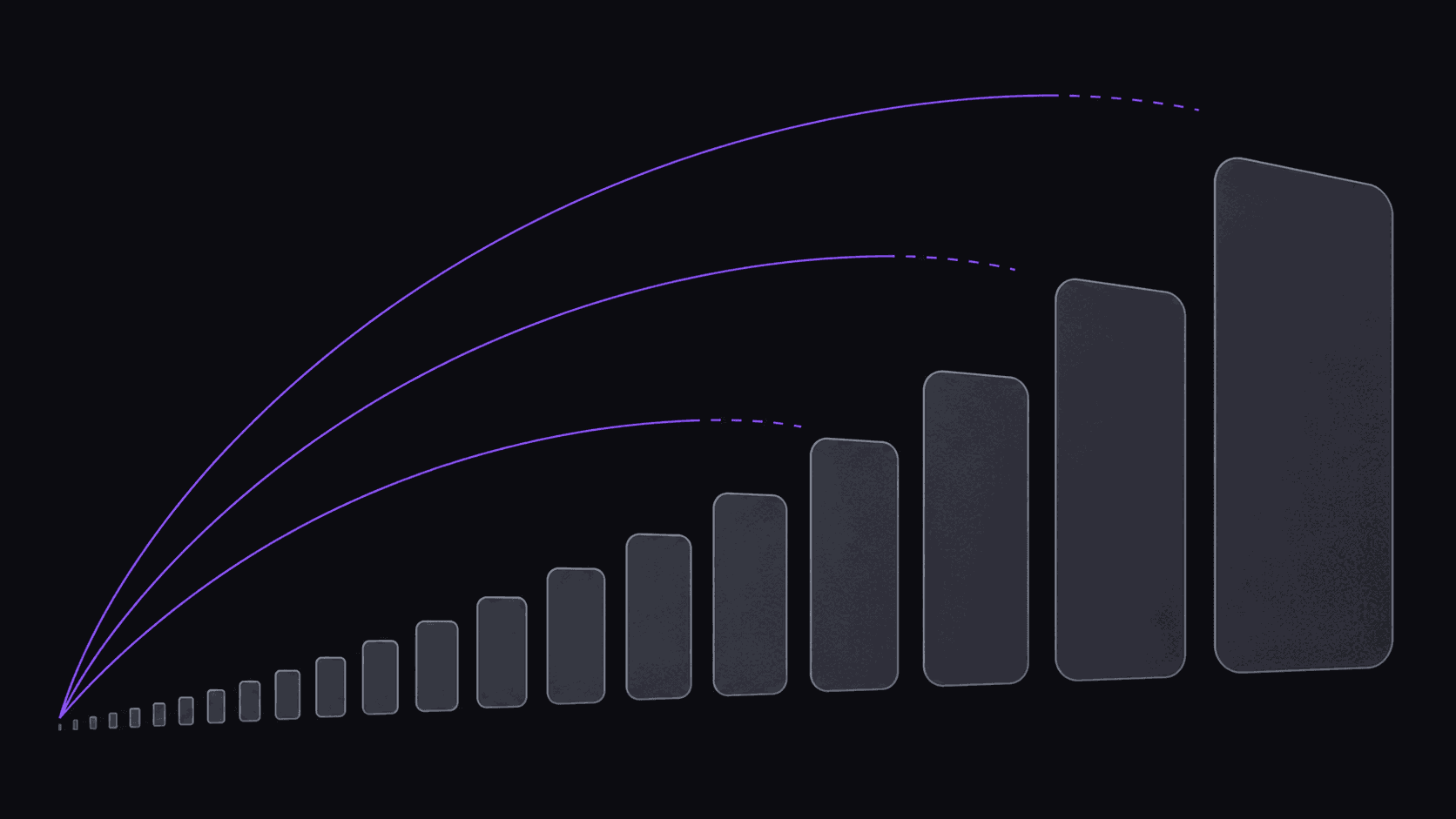
Month one is flat, and that's the design
The most common reason clip channels die is that people expect a line and get a floor.
For roughly the first 30 days, a new channel sits between zero and a couple hundred followers almost regardless of how good the clips are. The recommendation system is still working out who your content is for, and it does that by showing a little of it to a lot of different people and watching. That process takes weeks of posts, not days.
So month one produces the worst possible feedback: real effort, no signal, no way to tell whether you're building something or wasting time. Most people quit here, usually somewhere between week four and week eight, right before the part where it starts working.
The only useful thing you can do in month one is remove every reason to stop. Which mostly means not building a routine that depends on you having a good week. Clippers who survive month one are almost always the ones who reduced the daily job to approving clips rather than making them. Jake, a content creator, grew his views 5x. Individual results vary — what one channel gets out of a change depends on its niche, sources, and posting consistency.
Days 30 to 90: uneven, and that's also normal
Somewhere after day 30, growth starts. It arrives lumpy: 60 new followers one week, 300 the next, 40 the week after. The lumpiness isn't you doing something differently. It's the platform testing different audiences and occasionally finding a good one.
A channel that's working typically lands between 1,500 and 5,000 followers by day 90. Sitting under 1,000 at day 90 with consistent posting is a real signal — usually source fit or format fit rather than effort. Changing what you clip at that point is more productive than clipping more of the same thing harder.
The metric worth watching in this window isn't follower count, it's the shape of your clip outcomes. If one clip in twenty substantially outperforms the rest, you have a working formula and a discovery problem. If nothing ever breaks out, you have a material problem. Those need different fixes, and follower count alone can't tell you which you have.
Days 90 to 180: compounding
This is the good part. Channels that clear day 90 usually see weekly growth step up from dozens to hundreds or low thousands, landing somewhere between 10,000 and 30,000 followers around day 180 in mainstream niches.
What's happening is that the system now has a confident model of who responds to you, so more of your posts get served into audiences that engage, which strengthens the model. That's the flywheel people describe vaguely as "momentum," and it's the reason consistency matters more than any individual clip.
The way people break it is by getting excited and changing everything: new niche, new format, new posting rhythm, all at once. Every change resets some of what the system has learned. If you want to test something in this window, test one variable and keep the rest boring.
This is also the natural moment to add the second platform if you haven't. You have a proven clip formula and no evidence yet about how it travels. Cross-posting doubles the discovery surface without doubling the production.
The plateau around 50K, and what gets you past it
Most clip channels stall somewhere in the 50,000 to 80,000 range, six to twelve months in. It's a saturation ceiling: you've reached most of the people on that platform who want that specific thing, and additional effort inside the same box returns very little.
Three things move past it. Widening the niche — more sources, adjacent topics, a broader definition of what your channel covers. Adding a platform, which resets the discovery curve from scratch on a new surface. Or raising production quality enough that the channel reads as a different tier of thing than it did before.
What doesn't work is posting more of exactly the same clips at exactly the same audience. That's the diagnostic: if doubling your output changed nothing, you've hit a ceiling rather than an effort limit. The clip channel plateau entry describes the pattern in more detail.
Above 200,000 followers, something else changes: sponsor inquiries start arriving instead of being chased. The threshold isn't sharp — some channels see inbound at 100K, some not until 300K — but the flip from outbound to inbound is real, and it's where clip channel income stops being tied purely to view payouts.
Why channel three usually beats pushing channel one harder
The plateau is exactly why experienced operators run several channels.
Five channels at 50,000 typically out-earn one channel at 250,000. Each gets its own independent shot at discovery, each carries its own revenue surfaces, and revenue per follower barely degrades at smaller sizes. Meanwhile the operator cost of channel four is nowhere near a third more than three — once source picks, approval habits, and posting windows are established, the routine transfers.
The constraint is your own attention, and it binds around eight to ten channels for one person. Past that, the operations that keep growing add people rather than channels.
The sequencing that works: run one channel until you know what a good clip looks like in your niche and you have a routine that survives a bad week. Then clone the routine. Launching three channels in month one just gives you three flat curves and three times the reasons to quit. Managing multiple clip channels covers what to standardize before you duplicate.
Year two diverges by niche
Channels that make it through year one see year two split sharply along niche lines.
Gaming and podcast clips channels tend to keep climbing — the source pool keeps refreshing, new creators enter, and audience inflow continues. Finance and business channels more often flatten in year two because the addressable audience is smaller and saturates faster, even though they earned more per view getting there.
That's the delayed cost of the high-payout niches, and nobody mentions it in month one. It's not a reason to avoid them; it's a reason to plan the year-two move — a second channel, a widened topic, a platform you haven't touched — before you need it.
The general rule the curve teaches: your first year is decided by whether you keep posting, and your second is decided by what you picked to post about.
Frequently Asked Questions
Almost always the same shape: four to eight weeks of posting, flat numbers, a reasonable-sounding conclusion that it doesn't work, and a stop. Most new clip channels end this way. The ones that don't are usually the ones whose daily job was small enough to keep doing while it wasn't working yet.
Only slightly. A higher posting cadence gives the system more to learn from, and posting to two platforms from day one gives you two curves instead of one. Neither shortcuts the learning period materially — the calendar does most of the work.
Outliers do it in nine to fifteen months. Channels that get there at all typically take two to four years. Anyone benchmarking against a sub-nine-month climb is benchmarking against a lottery ticket.
Wait until the first one has a routine you could hand to someone else — known sources, a settled format, a posting schedule you don't have to think about. Duplicating a routine is easy. Duplicating uncertainty just doubles it.
Related Articles
See also
Survive month one
AutoClip turns your source uploads into finished clips in about five minutes, so the daily job is an approval pass instead of an editing session.
Get started for free