Chess Streaming Clip Channel Guide: How to Clip Hikaru, GothamChess, and Magnus
Updated
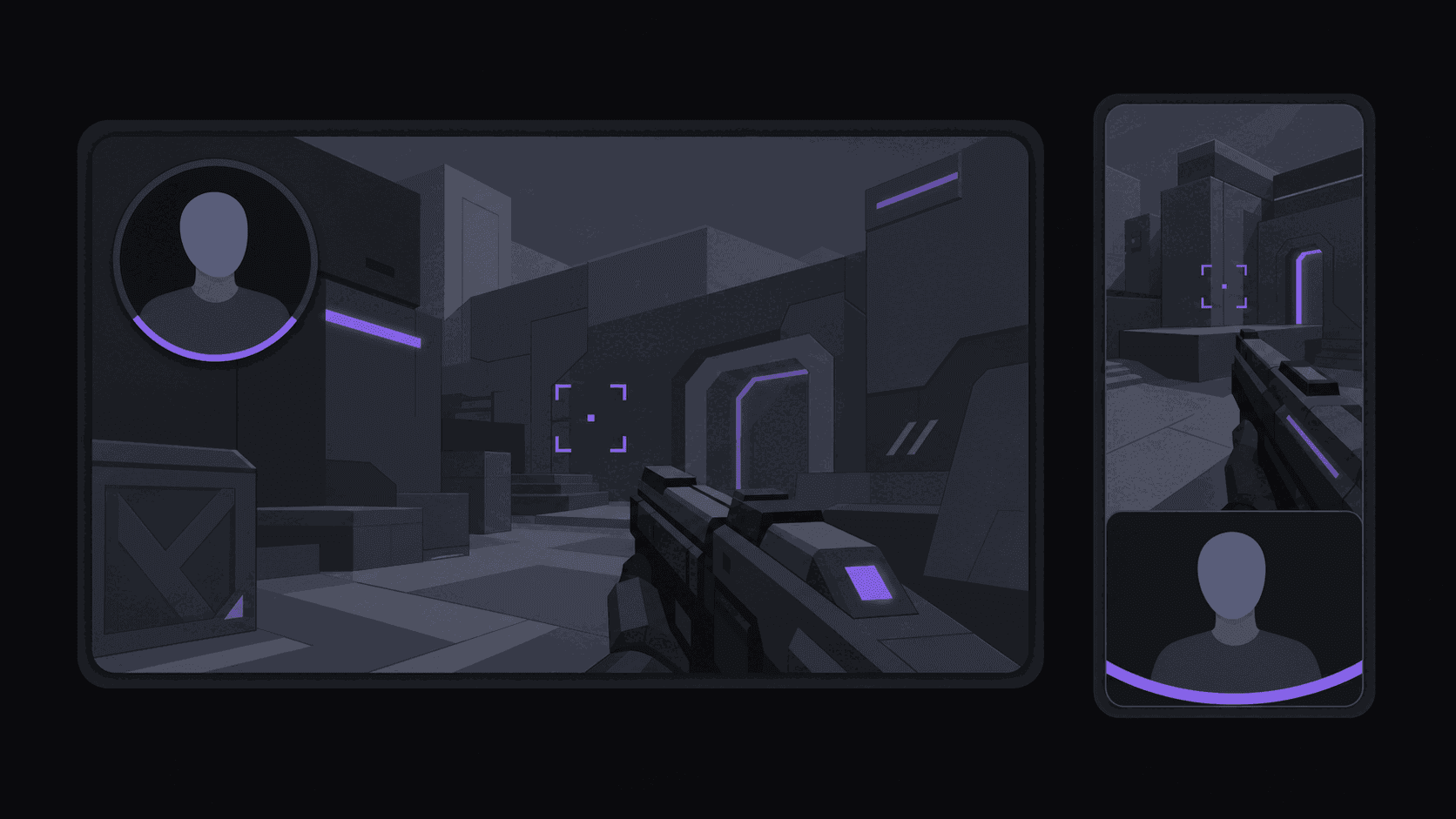
The framing problem nobody warns you about
Chess is the one niche where the standard advice breaks. Every other category tells you to crop tight on the face. Do that with chess and you delete the entire reason anyone is watching — the board.
A chess stream is a square board plus a facecam plus, usually, an eval bar. Center-cropping a 16:9 frame to 9:16 will either cut the board's edge files off or shrink it until the pieces are unreadable at phone size. Either way the clip fails, and it fails silently: the view count looks fine because the hook worked, and the watch-through collapses at four seconds because nobody can see what happened.
The fix is a stacked layout — reaction on top, board below, both legible. Multi-region layouts on Scale let you hold three zones at once when a clip needs face, board, and eval bar together. If you only take one thing from this guide, take this: judge every chess clip on a phone before you post it, not on your monitor.
Where the clippable moments actually are
Chess clips do not go viral because of good chess. They go viral because of a human reaction to chess. Sort your hunting accordingly.
Blunders in winning positions. A player is up a rook, hangs the queen, and the face does the rest. Universal — you do not need to understand the position to feel it.
Announcement of mate several moves out. The pattern of calling it, then executing it, is inherently satisfying and reads in twenty seconds.
Tilt. Bullet and blitz produce genuine emotional collapse on camera, which is the most transferable content chess has.
Teaching moments where an educational streamer stops and explains one idea cleanly. These do worse on TikTok and considerably better on Shorts, where the audience skews toward wanting to learn something.
Cheating drama and title-match reactions spike hard and die fast. They are worth chasing only if you can post the same day — see how fast clips go viral after streamer events.
Sourcing without stepping on rights
There are three tiers of chess source material and they carry very different risk.
Creator channels — the streamers' own YouTube uploads and stream VODs — are the safest and the most clipped. Check each creator's stated policy on clip channels; some are explicit and welcoming, others are not. Credit in the caption is cheap and buys goodwill.
Event broadcasts owned by tournament organizers are a different matter. Official coverage is licensed content and clipping it invites claims regardless of how transformative you think your edit is. Treat commentary-desk footage as off limits unless the organizer publishes reuse terms saying otherwise.
The third tier is derivative: podcasts and interviews where players talk. Underclipped, longer shelf life, and much less competition than a viral blunder that eight hundred accounts already posted. Related: fair use for clip channels.
A workable weekly system
Chess has a scheduling advantage most niches lack: the big creators publish constantly, so your input never dries up.
Add two or three public YouTube or Twitch channels to monitoring. New uploads and VODs get clipped without you submitting anything — Starter monitors one channel, Pro three, Scale ten. A typical video returns around nine clips in about 5 minutes; a six-hour tournament stream takes proportionally longer to come back but bills cheaply, because only the top segments count against credits, so a long VOD usually runs 35 to 90 of them.
Approve in one sitting, fix the two or three clips where the cut lands early, and schedule across the week rather than dumping the batch. Spaced posting beats bulk posting on every platform that matters. Save your board framing and caption style into a brand kit so the channel looks like one thing rather than forty experiments.
What to expect, honestly
Chess is not an easy niche. Audiences are knowledgeable and unforgiving about mislabeled positions, the framing constraint is real, and the top creators already have official shorts teams working the same material.
What it has going for it: enormous evergreen search demand, an audience that watches long for the format, and moments that translate across languages with almost no adaptation. On Pro, caption translation covers 31 languages and AI dubbing 25, and chess is one of the few niches where a translated clip loses nearly nothing — the board is the same in every language.
Go in expecting the first month to be calibration. Post everything, read the retention curves, and let the data tell you whether your audience wants blunders, teaching, or drama. Reading clip analytics is the follow-up.
Frequently Asked Questions
Enough to not mislabel a position, which is a lower bar than playing well. The failure mode is a title claiming a brilliancy over a clip showing a routine trade — chess audiences notice instantly and the comments will say so. When unsure, describe the reaction rather than the move.
Shorts tends to reward the explanatory clips and TikTok the pure reaction ones. Reels sits between. Cross-post everything and let each platform sort it, but write the title for the platform rather than reusing one string everywhere.
Stacked layouts with the board given the larger share of frame, and a review pass on an actual phone before scheduling. If pieces are ambiguous at phone size, the clip is not ready no matter how good the moment is.
Credits track source minutes, but streams bill only their top highlight segments, so a multi-hour VOD typically comes in at 35 to 90 credits. Check the source-length ceilings too: two hours on Starter, five on Pro, ten on Scale.
Related Articles
Clip chess without butchering the board
Stacked vertical layouts, word-synced captions, and automatic channel monitoring. Try a batch free and check it on your phone.
Get started for free